Anyone who visits us in August sooner or later asks the same question. Never loudly, more carefully, with a glance towards the beds: are you planning to tidy that up?
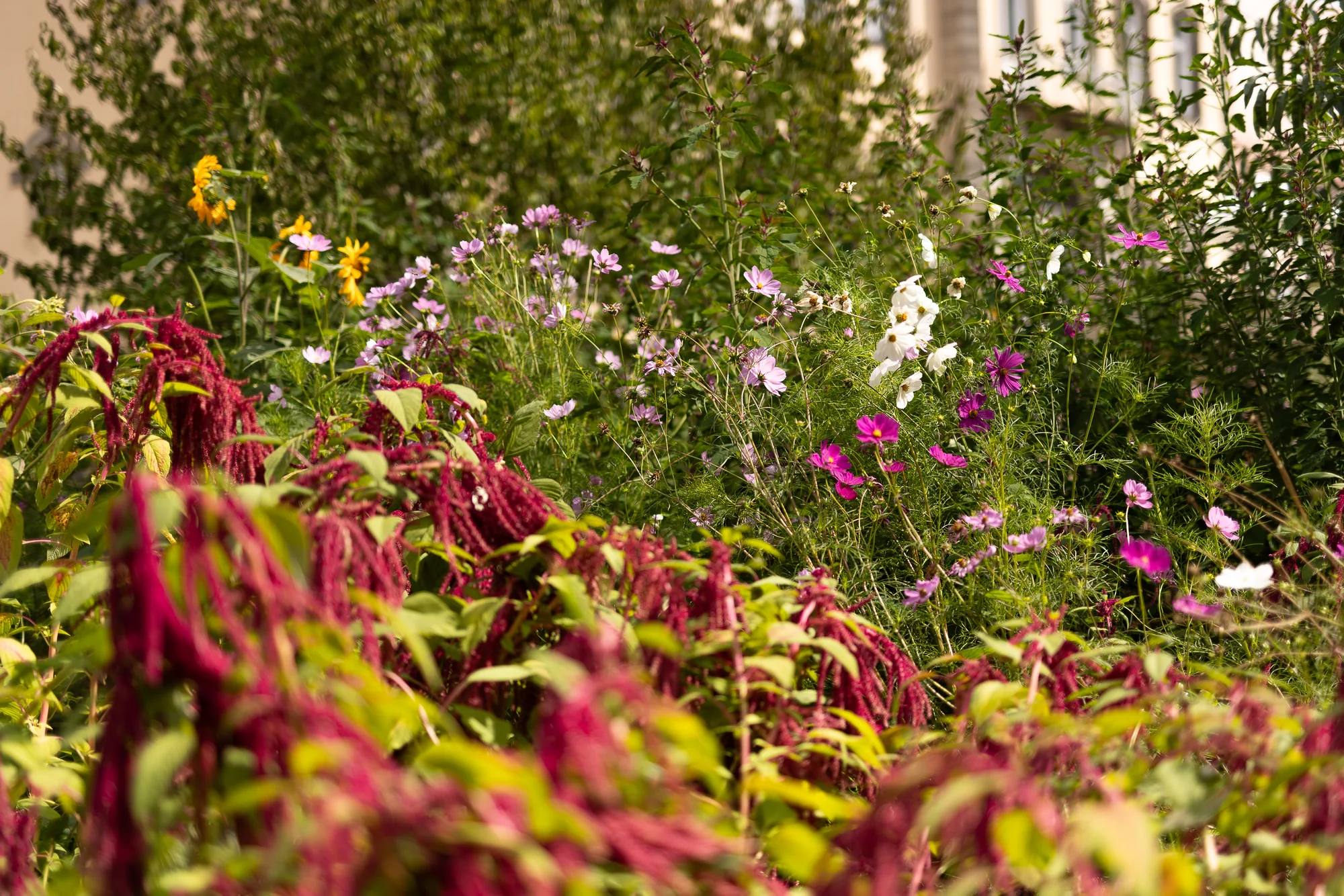
No. What looks from the outside like a bed somebody forgot is meant to look exactly like this. Tomatoes stand between cosmos, amaranth and mallow. Under the canopy of squash leaves the soil stays damp, even after a fortnight without rain. The fennel is flowering when it should long since have been cut, because the hoverflies need it. And we need the hoverflies against the aphids.
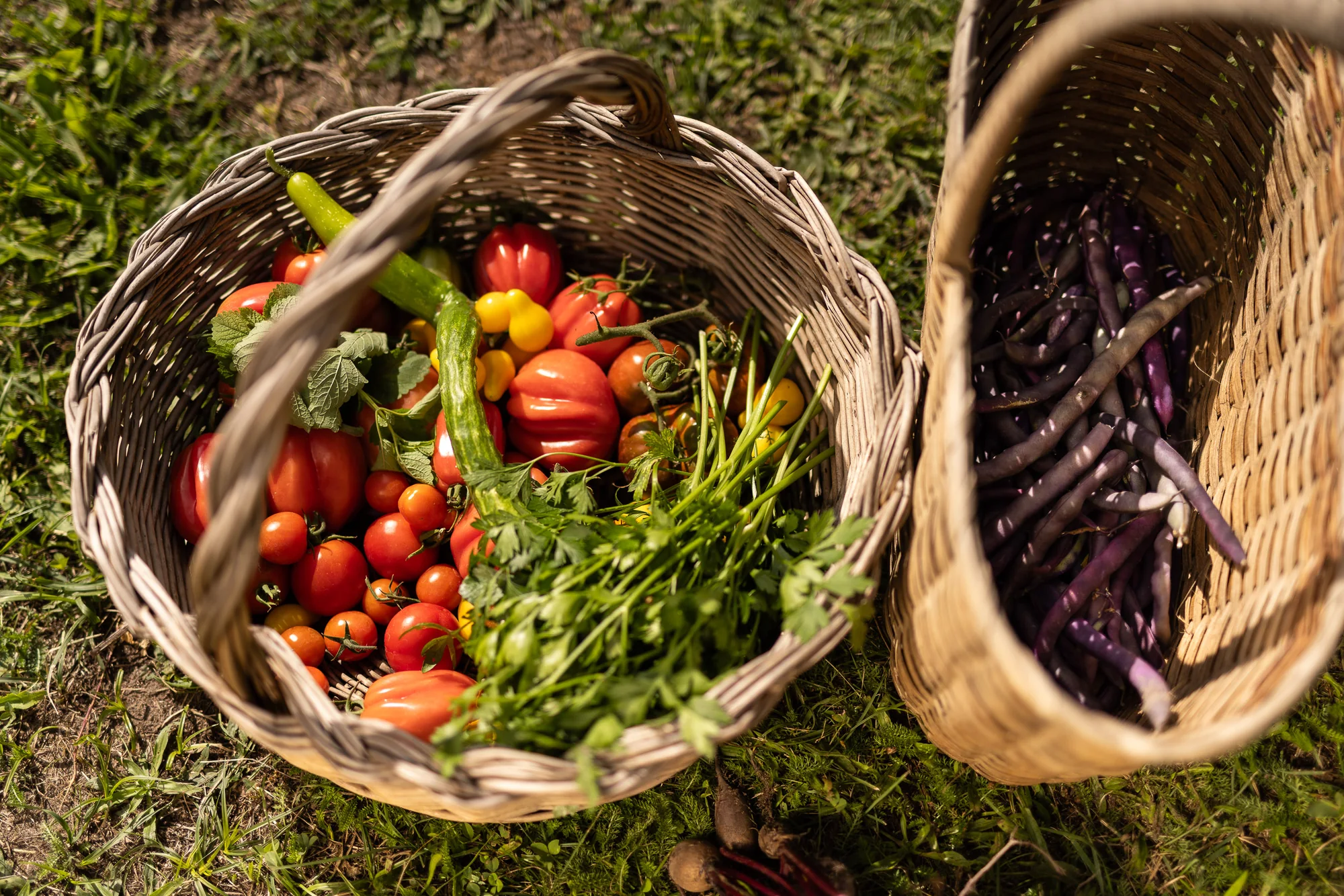
Harvesting here is not a job to be ticked off, it is a search. We set out with an empty basket and no real idea what will end up in it. Push a few leaves aside, bend down, look, and underneath lies a courgette that was not there yesterday. Our son is four and runs into the garden in the morning before he eats breakfast. He worked out what this place is for faster than most adults do.
In short
- Our garden in Brandenburg is a permaculture garden, companion planted. Vegetables, herbs and flowers share the same bed instead of standing in separate rows.
- It looks disorganised and it is not. The flowers bring in beneficial insects, the leaves shade the soil, and the food grows in between.
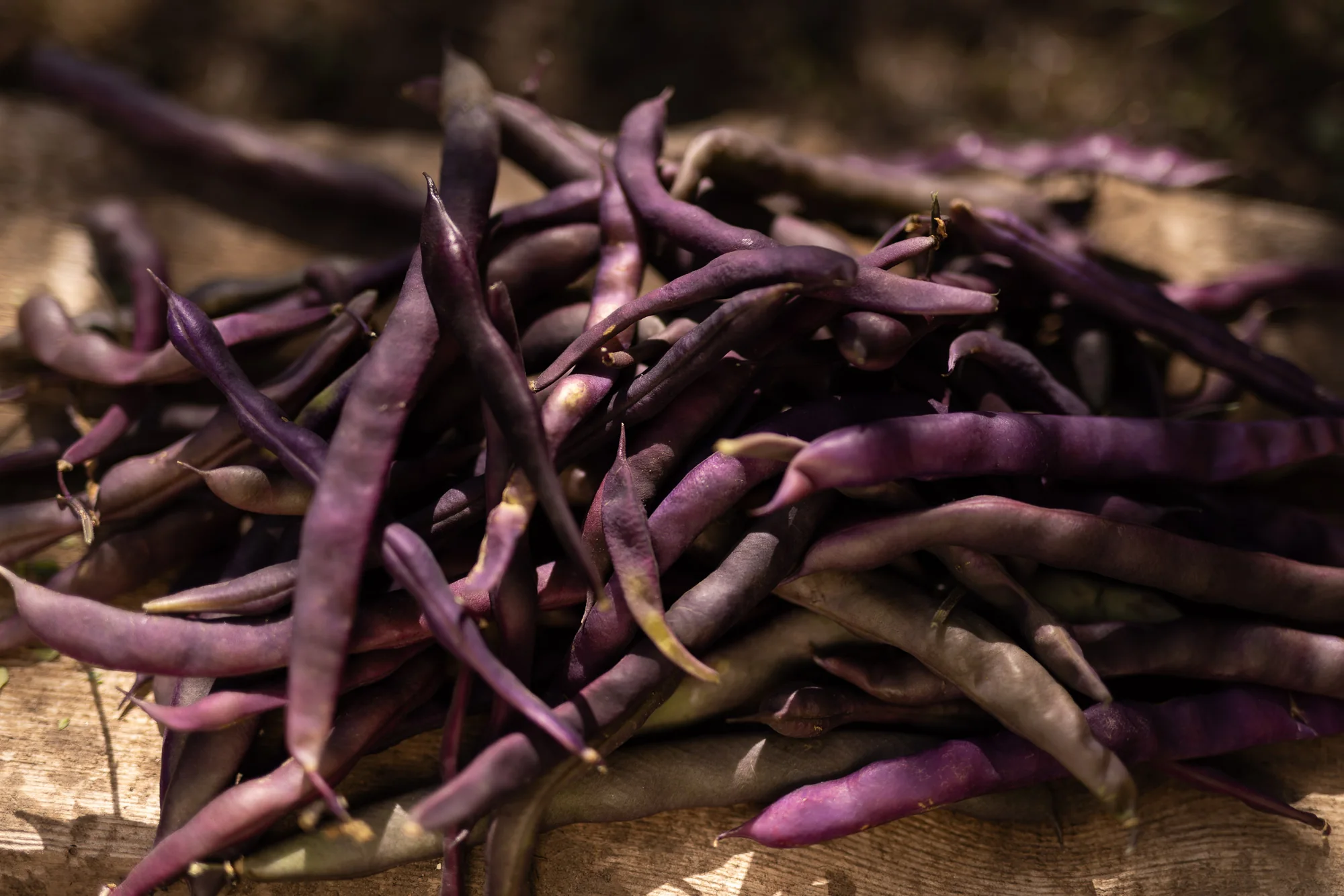
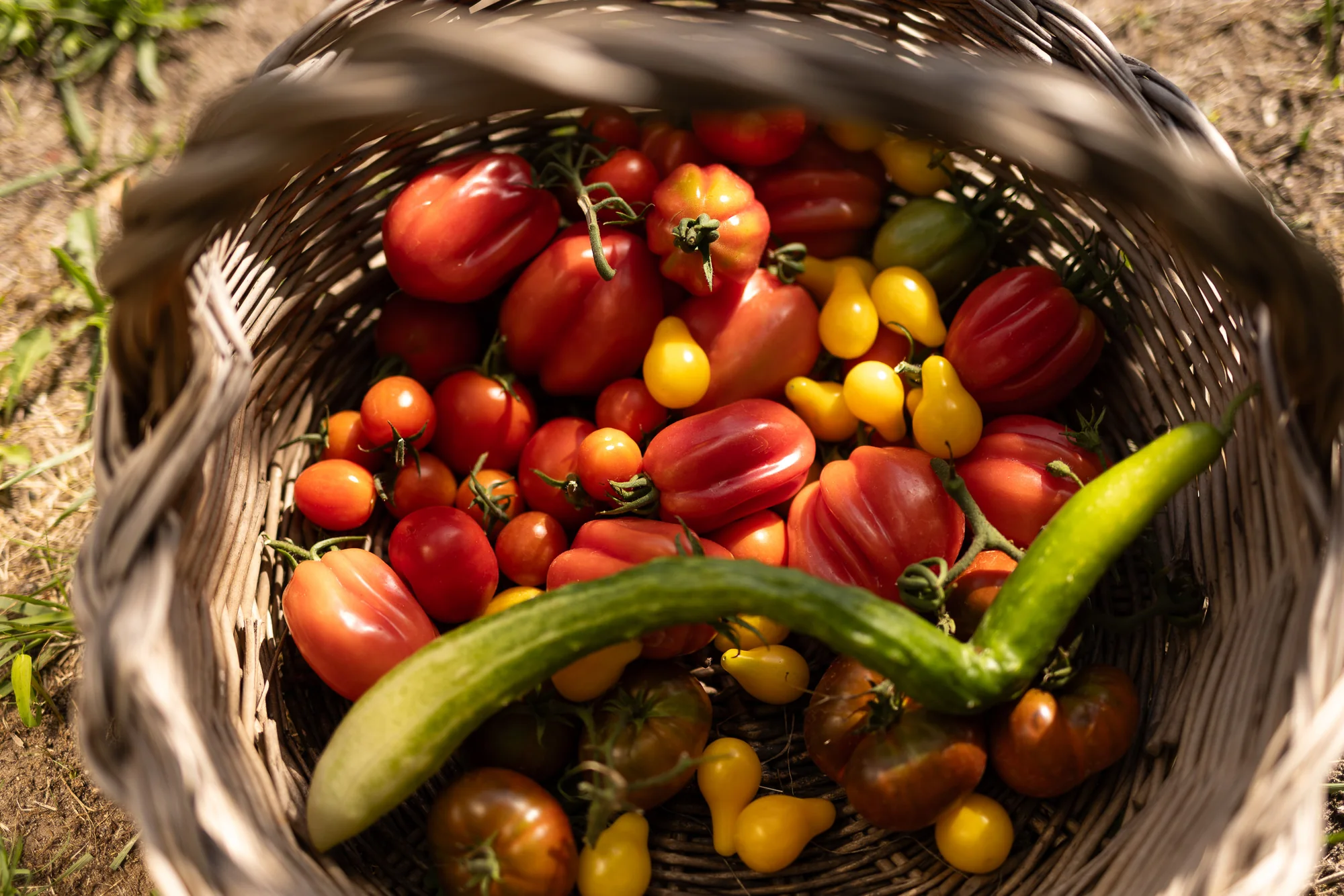
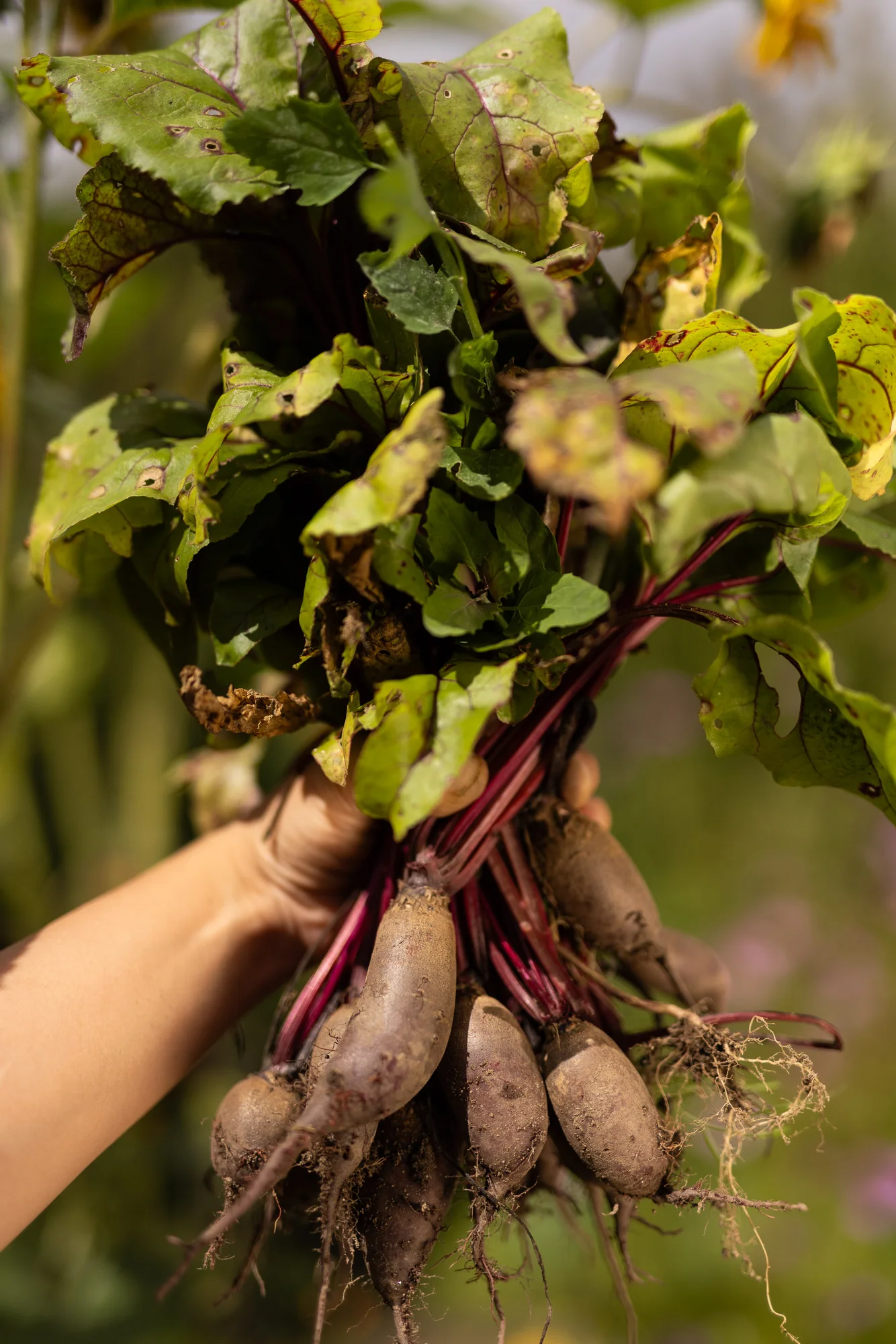
- In August this bed gives us beetroot, courgettes, squash, purple climbing beans, tomatoes in five colours, cucumbers, chillies and a herb bed that never runs empty.
- At the end of this piece there is a recipe made from exactly that: courgette fritters with herb quark and a warm bean and tomato salad. Serves four, 45 minutes, nothing you need a special shop for.
It looks like weeds.
It is a larder.
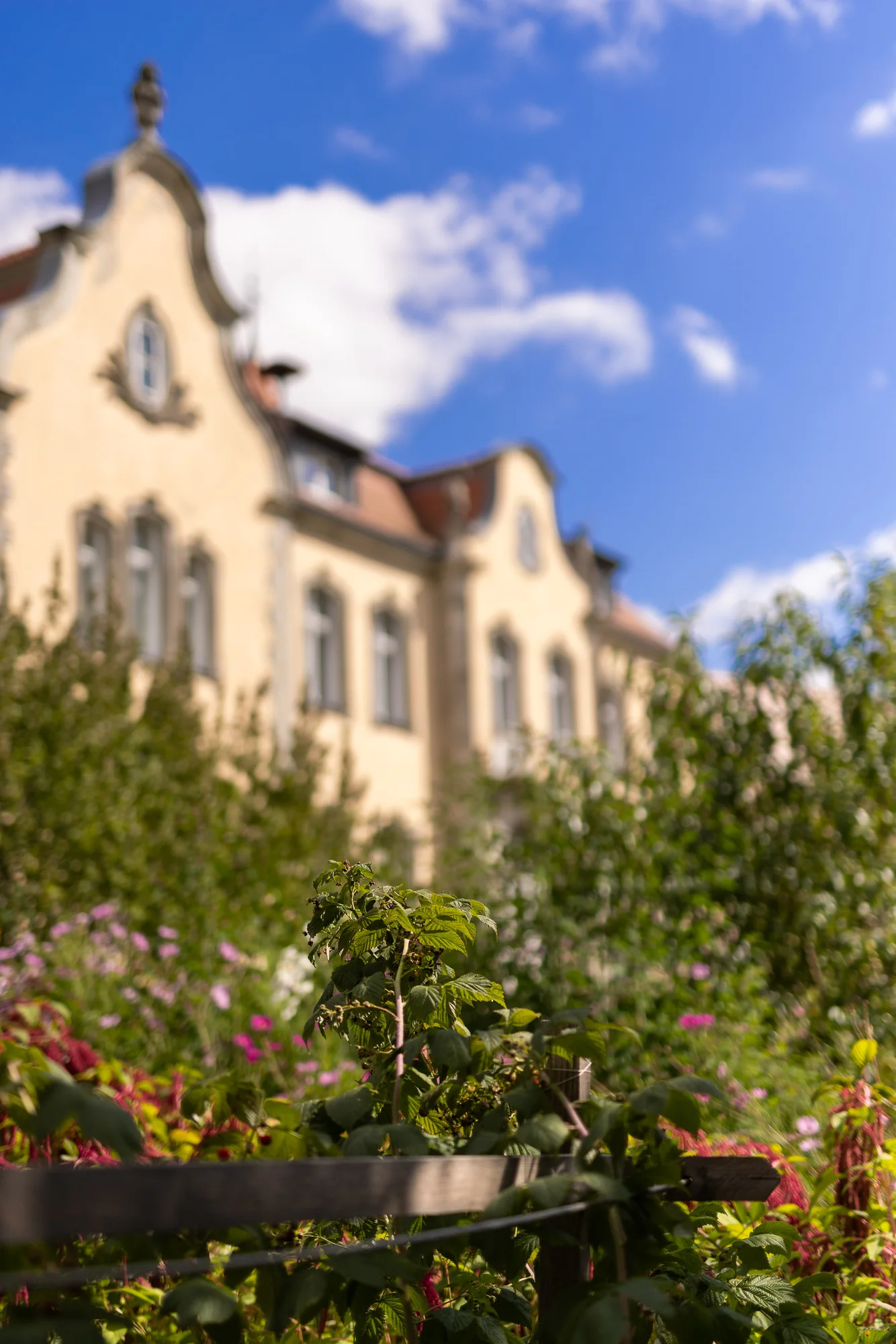
A tidy vegetable garden has straight rows, dark bare soil between them and not one flower that was not planned. It looks good. It is also drier, more fragile and noticeably quieter, because almost no insect has a reason to come by.
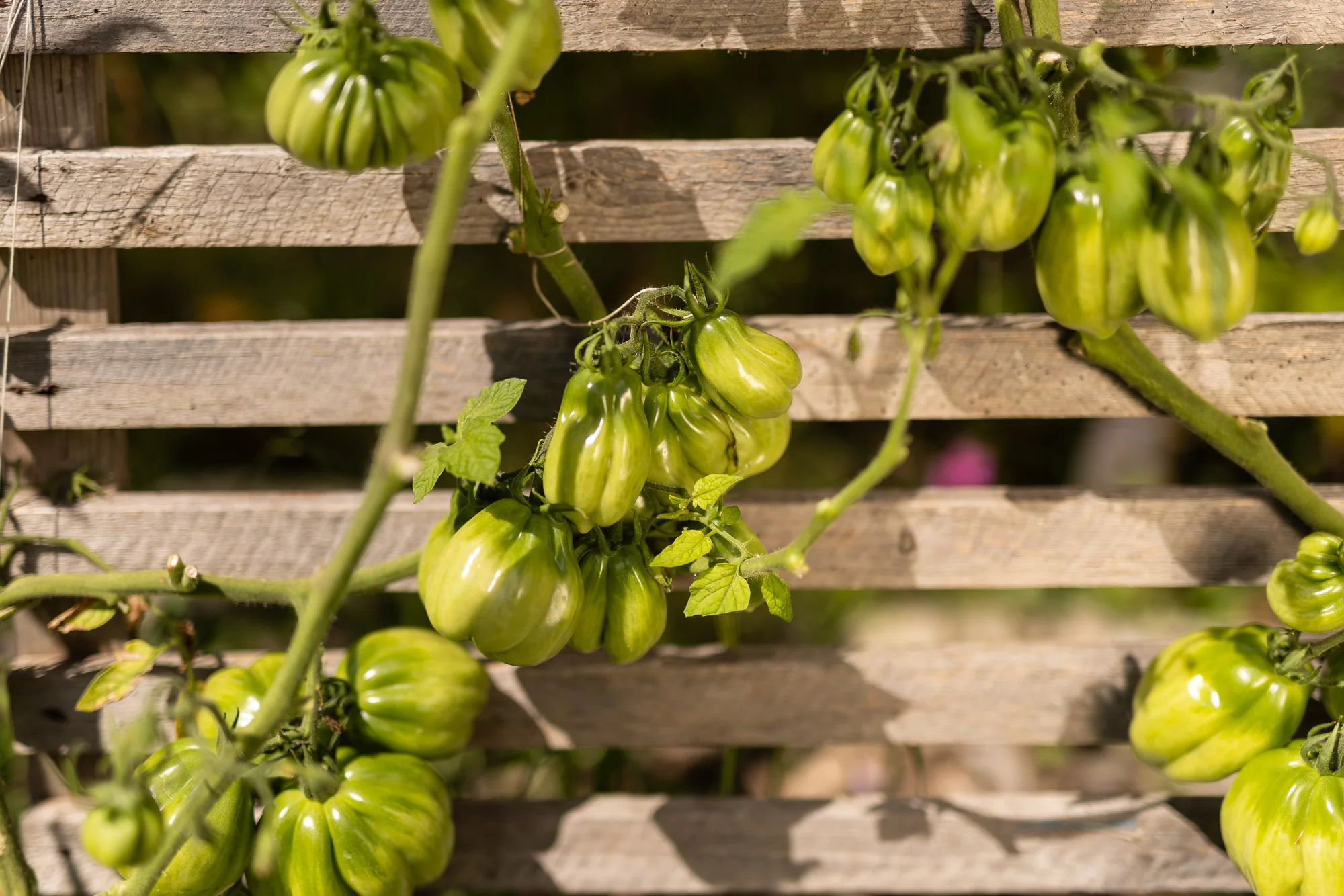
Ours grows in every direction at once, and that is the decision. The tomatoes hang on an old slatted fence because the fence was already standing and holds the day's warmth well into the night. Beside them stands whatever suits them. At some point we stopped thinking in beds and started thinking in neighbourhoods.
Search and
find
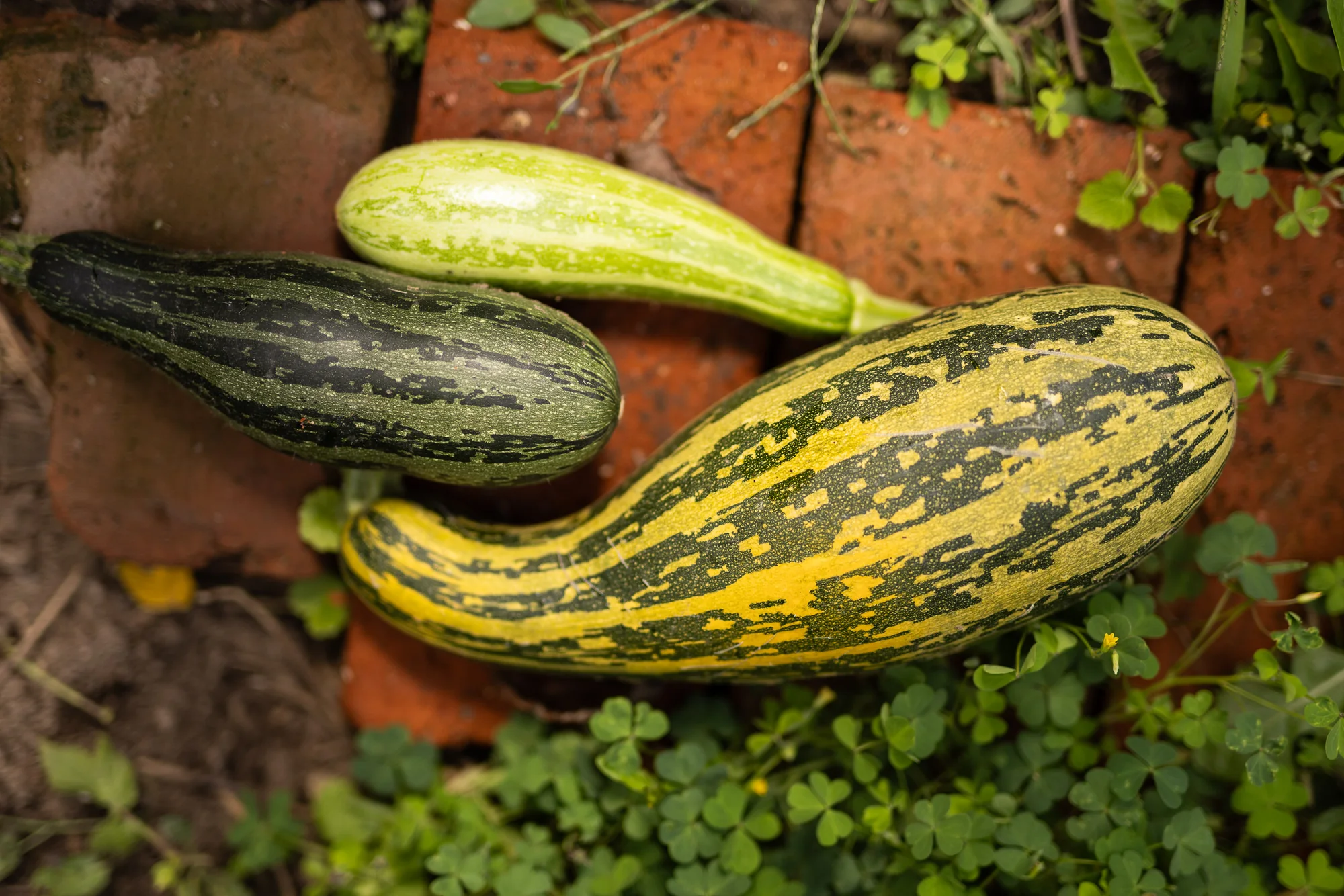
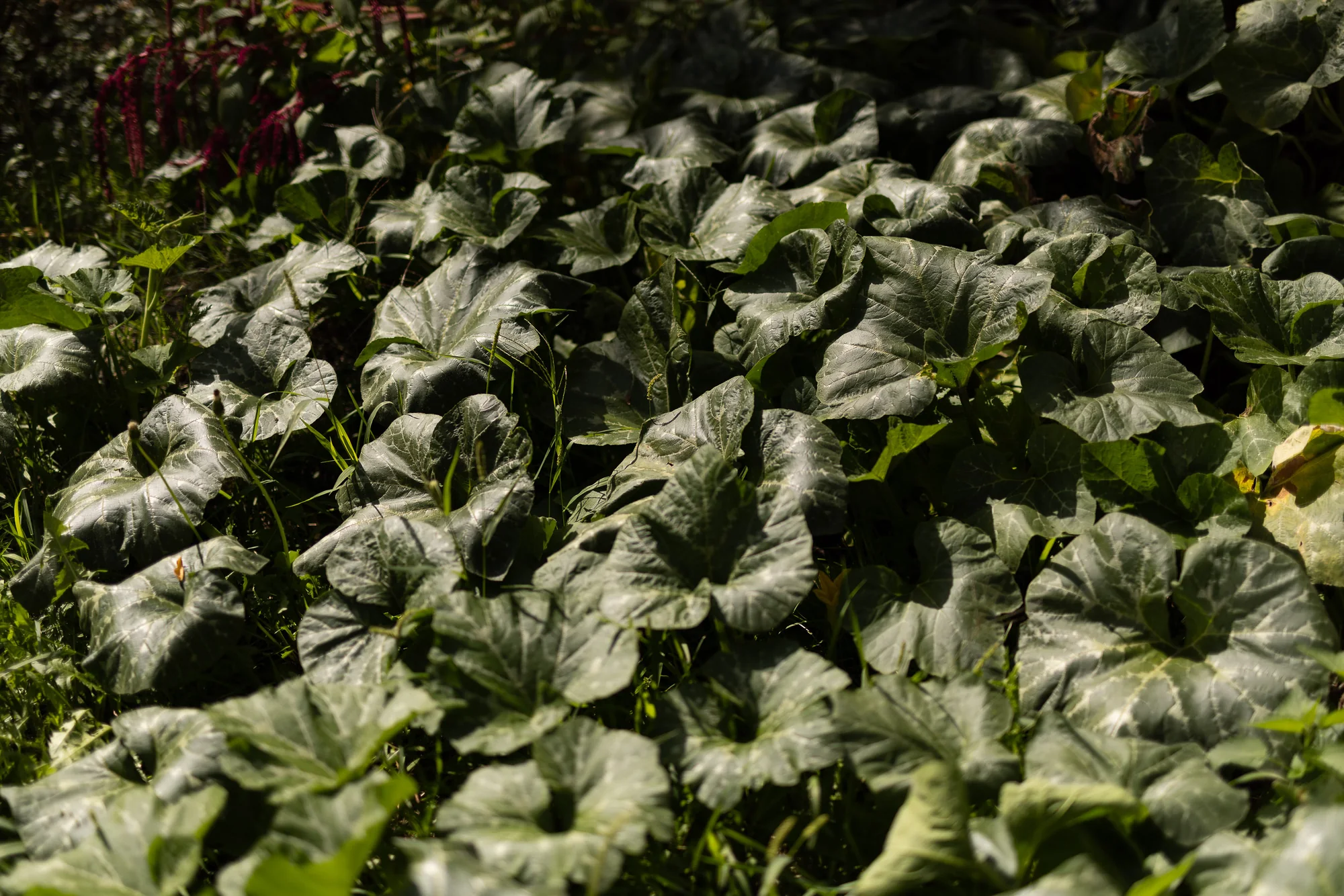
Courgettes are experts at hiding. Under their own leaves they are camouflaged so well that we have to look every three days. Wait a week and you no longer harvest a courgette, you harvest a club. These two were lying on the brick edge, half under clover. The day before there was nothing to see there.
That is where the pleasure lies. In a sorted garden the harvest is settled before you close the door behind you. Here every walk is a small search, and at the end there is a basket nobody would have planned. The menu writes itself on the way back to the kitchen.
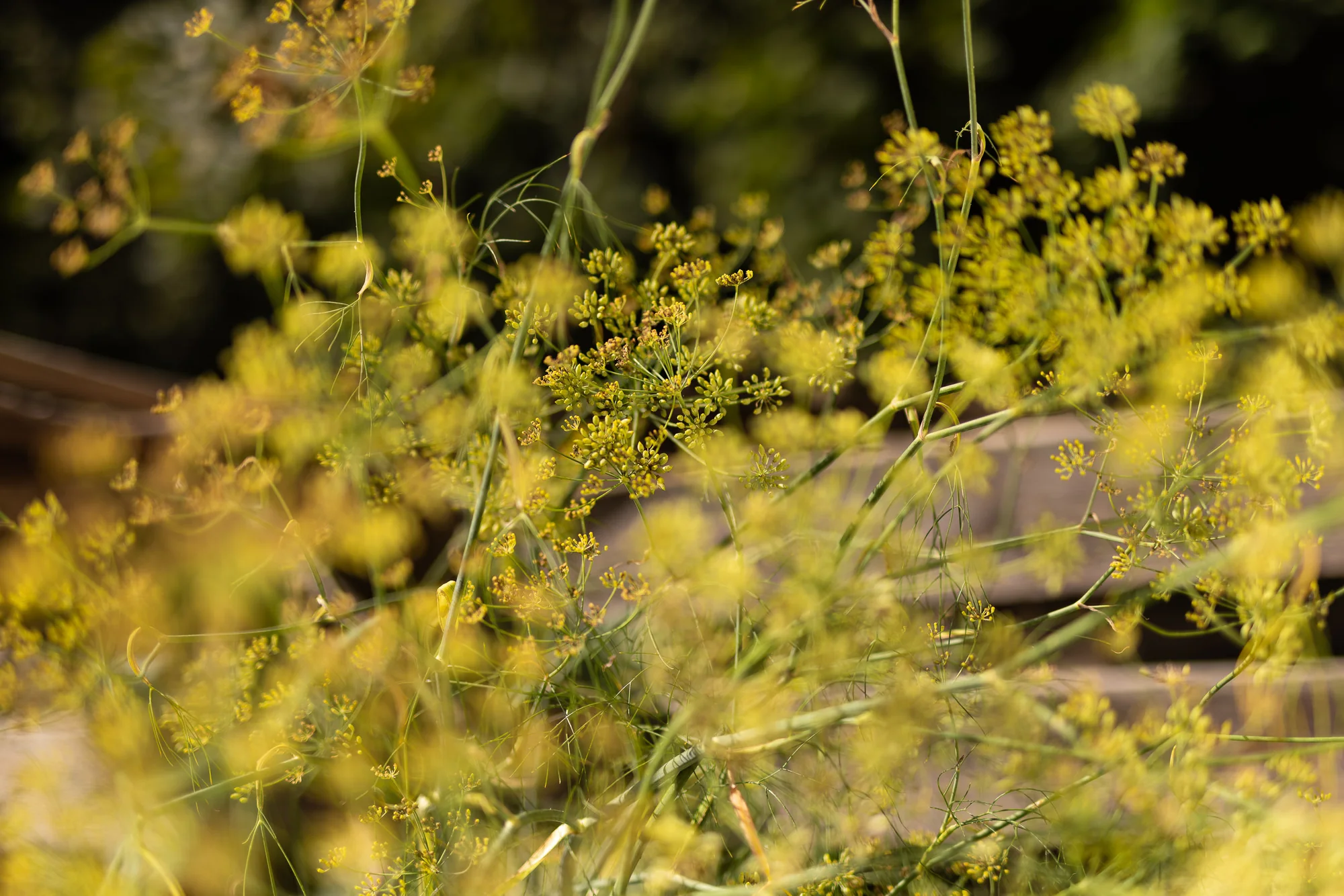
The fennel is allowed to flower. For the kitchen it would be better to cut it first, but in August those yellow umbels are the busiest place in the whole garden. Hoverflies lay their eggs beside them, and a single larva eats several hundred aphids in a fortnight. Since we started leaving the fennel standing we have managed without anything at all against aphids.
- Beetroot since June
- Courgettes and squash daily
- Purple climbing beans peak season
- Cocktail tomatoes, red and yellow daily
- Oxheart tomatoes from September
- Cucumbers daily
- Chillies from now
- Fennel in flower, seeds in September
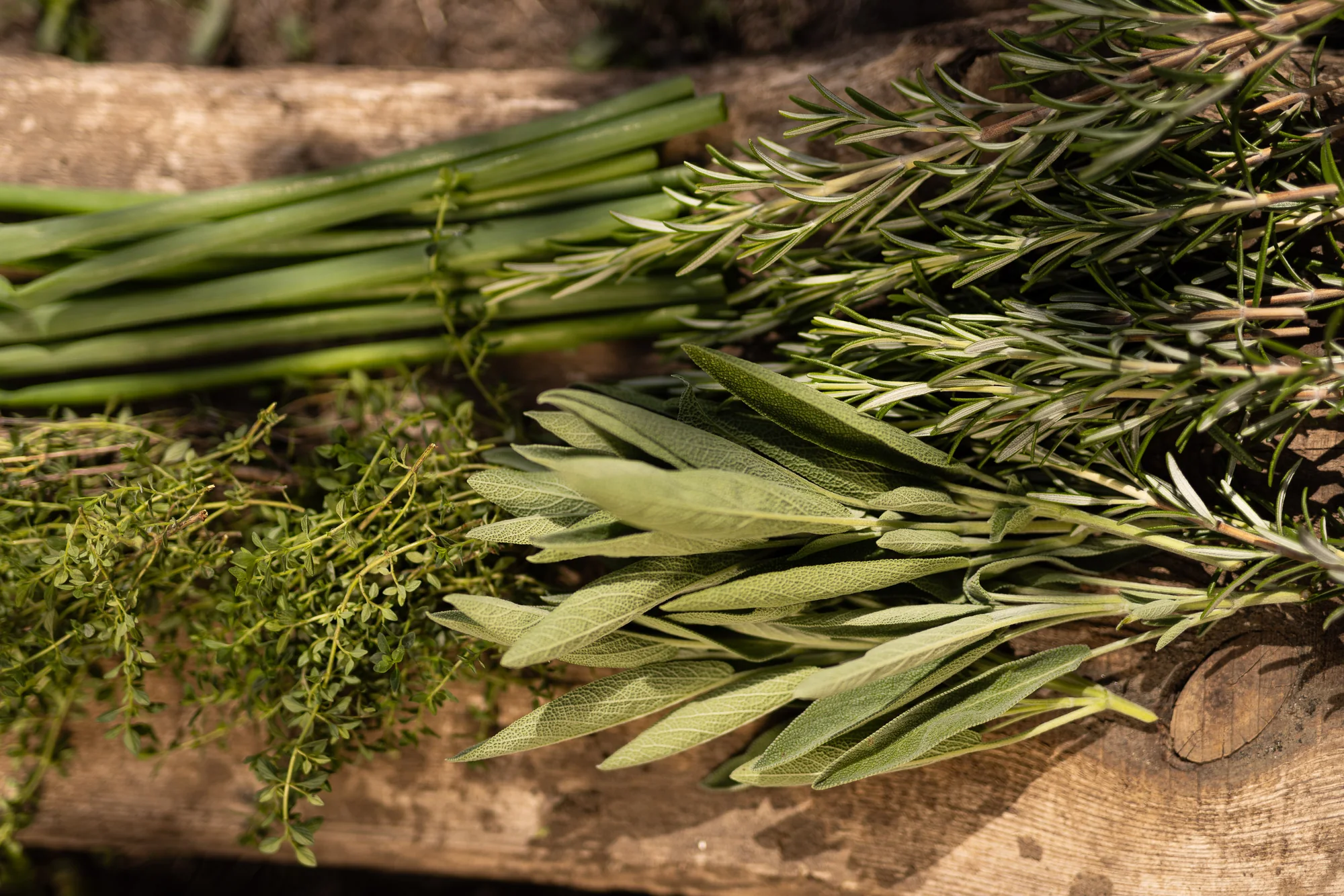
- Sage, thyme, rosemary all year
- Chives and parsley all year
- Amaranth in flower
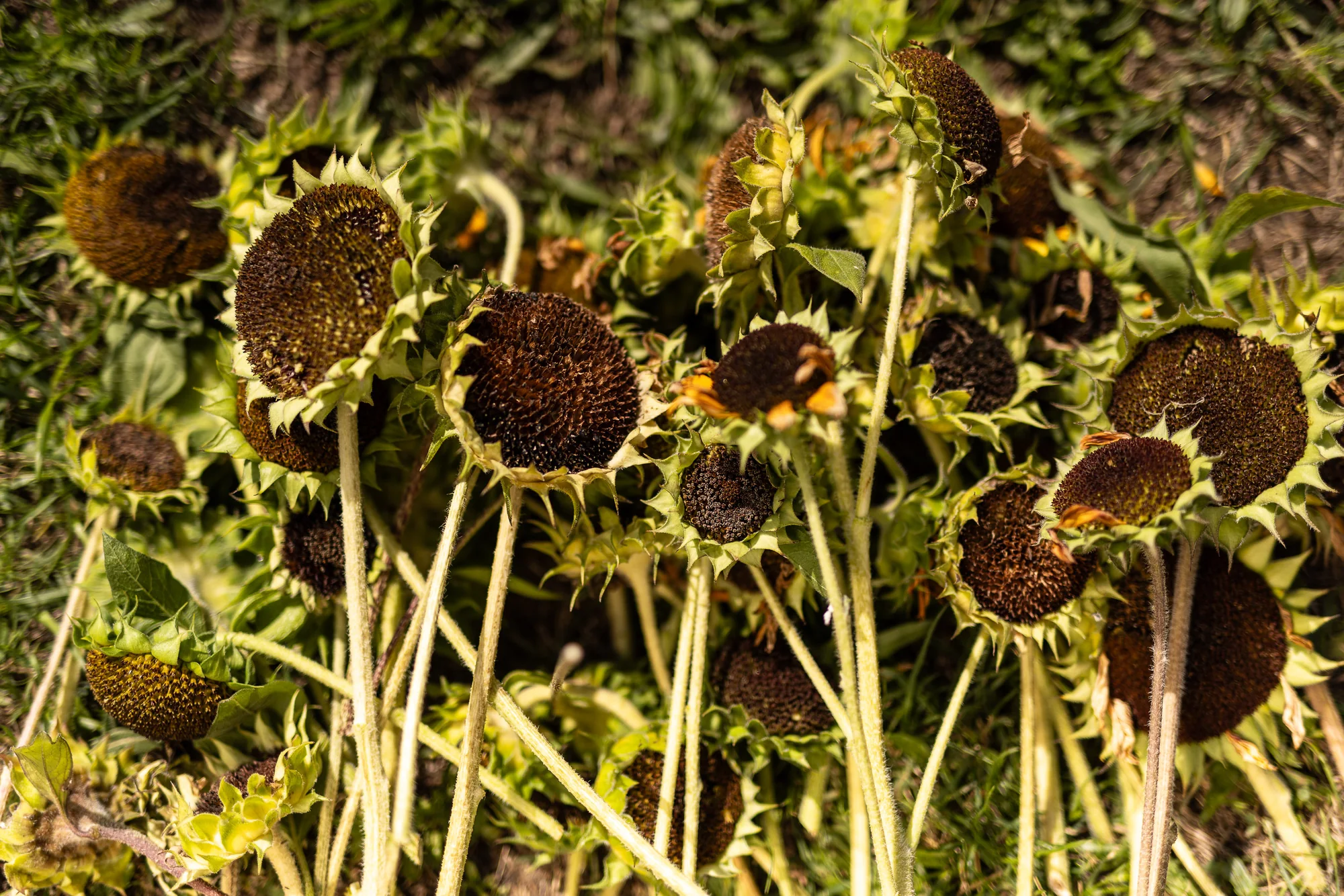
- Sunflower seeds for the birds
What stays
all year
Vegetables have their two or three weeks. Herbs are always there, and they are the reason a handful of ingredients still turns into a dish. Sage, thyme and rosemary come through the winter in the bed without any help from us. We cut the chives and parsley back every few days and they return stronger for it.
If you take one single thing from this piece, take this: plant herbs. They ask for little, forgive a lot, and change a dish more than any expensive ingredient can.
And then the menu
is decided
One basket of tomatoes in five colours, one basket of purple beans, a handful of herbs, two courgettes and a cucumber that grew for a day too long. That does not turn into a recipe from a book. It turns into dinner.