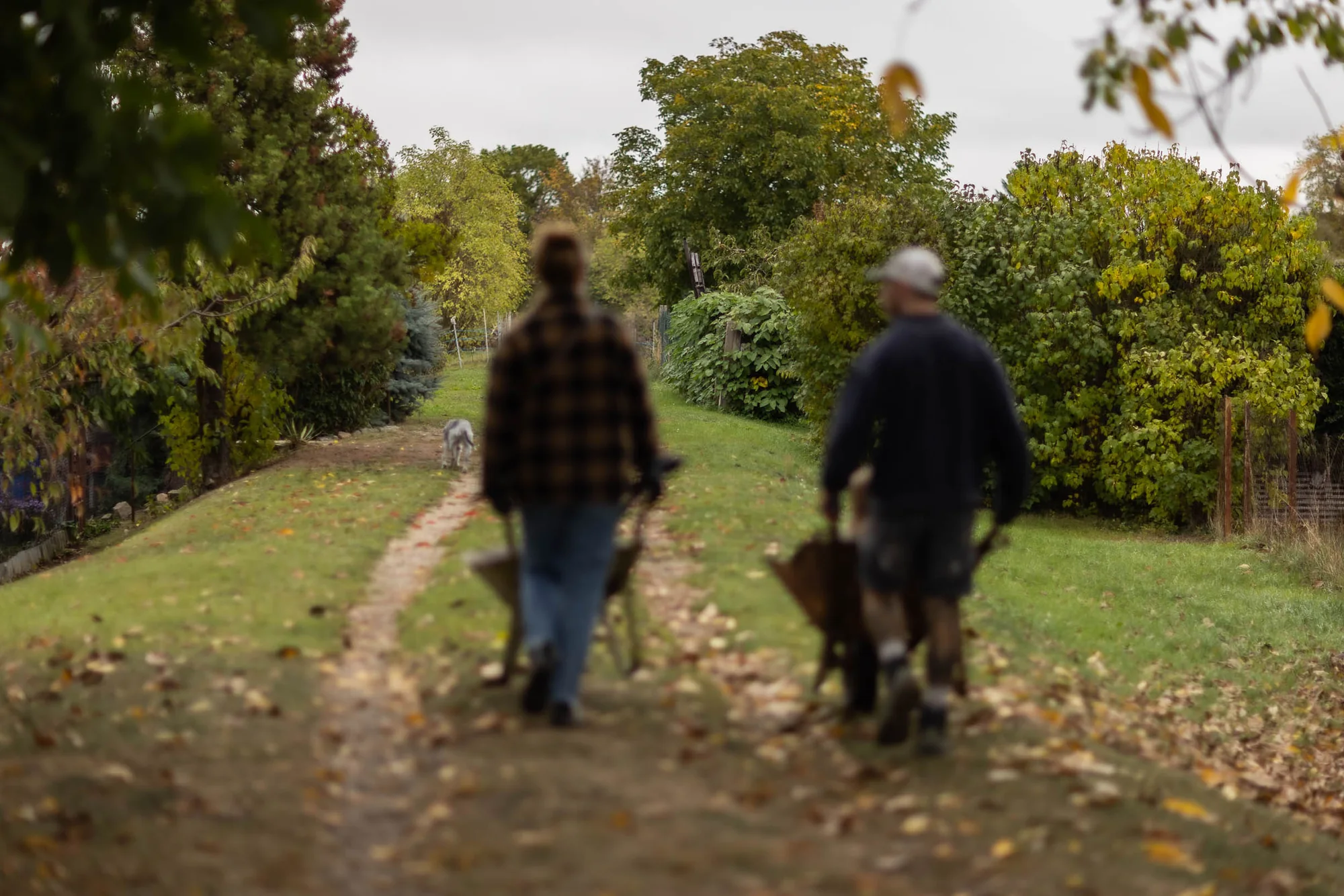
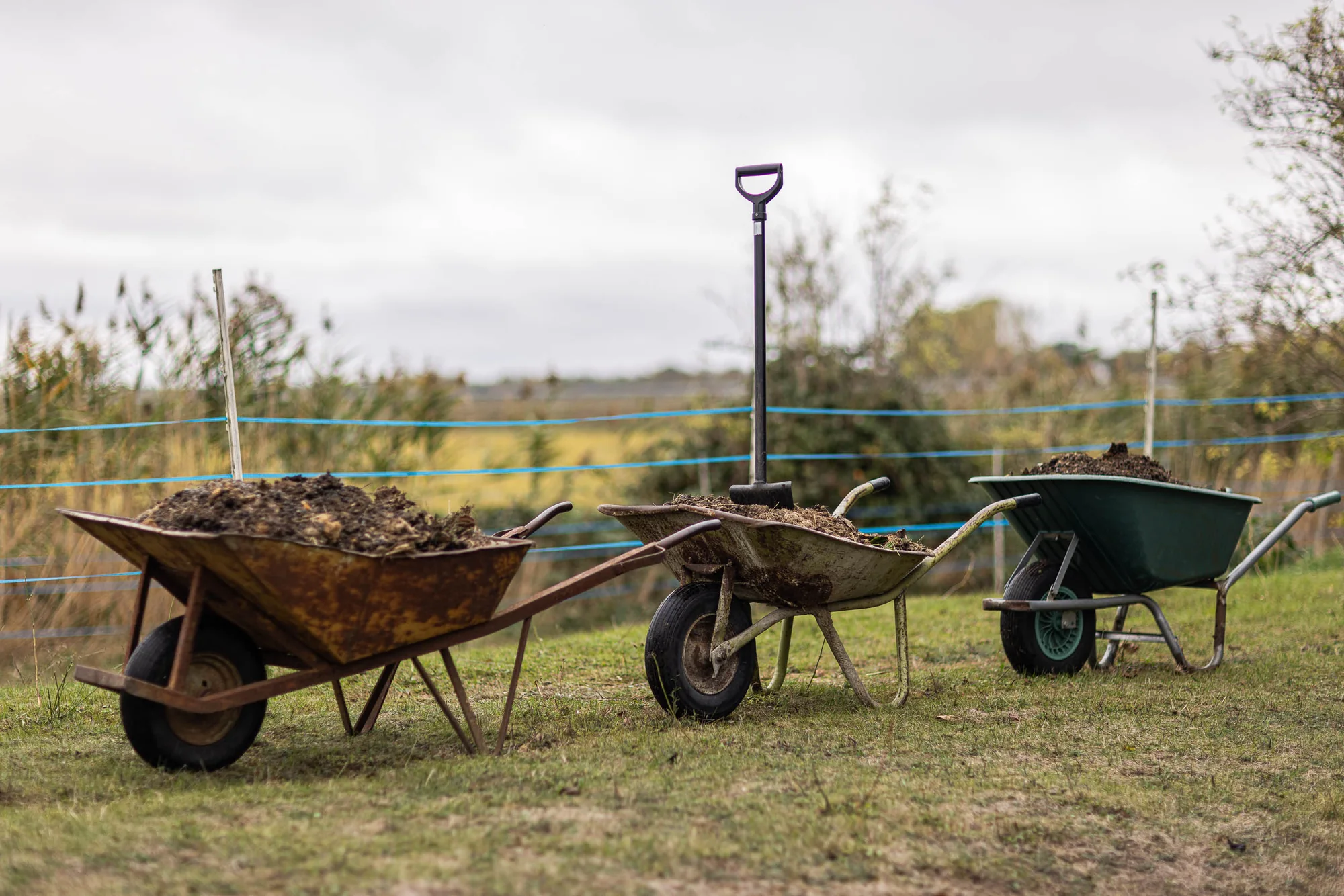
Some work shows the moment it is done, and some only shows half a year later. This is the second kind. On a grey Sunday in October we push wheelbarrows full of alpaca manure through the garden, and what comes of it will be on the plate in May.
Anyone with a garden is really tending something else: the soil underneath. Plants come and go with the seasons, the soil stays. It is the garden's memory, and after a summer of tomatoes, squash and beans, it is hungry.
So we give something back. Not out of a bag, but from next door: from the alpacas, who leave their manure so neatly in a handful of places that it is as though they knew we were coming. What follows is one of the loveliest days of the gardening year. And one with a surprising amount of science behind it.
In short
- In October we spread alpaca manure on the beds at Villa Oiva in Brandenburg. It feeds soil life through the winter and helps build humus.
- Alpacas use a few shared dung piles and do not graze around them. That makes collecting easy and keeps the pasture clean.
- Alpaca manure is known for being low in odour, finely pelleted and low in viable weed seed. We mix it with straw and leaves and use it to tuck the beds in for winter.
- On sandy Brandenburg soils every percent of humus counts. Organic matter helps soil hold water, and that effect is largest in sand.
- Further down: interactive charts on rain and soils in Brandenburg, a humus calculator for your own bed, and a month by month look at what happens under the winter cover.
Everything begins
under our feet
Soil is not dirt. A good garden soil is roughly half solid matter and half pore space: around 45 per cent minerals, about 5 per cent organic matter, and in between room for water and air. Those five per cent are the small number everything depends on. They are home to the fungal threads, bacteria, springtails and earthworms that turn dead material back into food.
How much life lives down there was estimated systematically for the first time in 2023 by researchers at Agroscope and the University of Zurich. Their answer: probably more than half of all species on Earth live in soil, around 59 per cent. Soil is not the ground beneath life. It is the largest habitat we have.
And it grows slowly. The FAO puts it at around a thousand years for a few centimetres of fertile topsoil, and by its figures 95 per cent of our food comes from that thin layer. Anyone with a garden is looking after something older than any house. And something that, with the right care, can be made a little better every year.
What is in a handful of soil
Shares by volume of a good, loose topsoil. Tap a section to see the role it plays.
Sources: Cornell University, SoilNOW · Anthony, Bender & van der Heijden, PNAS 2023 · FAO via UN News 2022
The neighbours with
the long necks
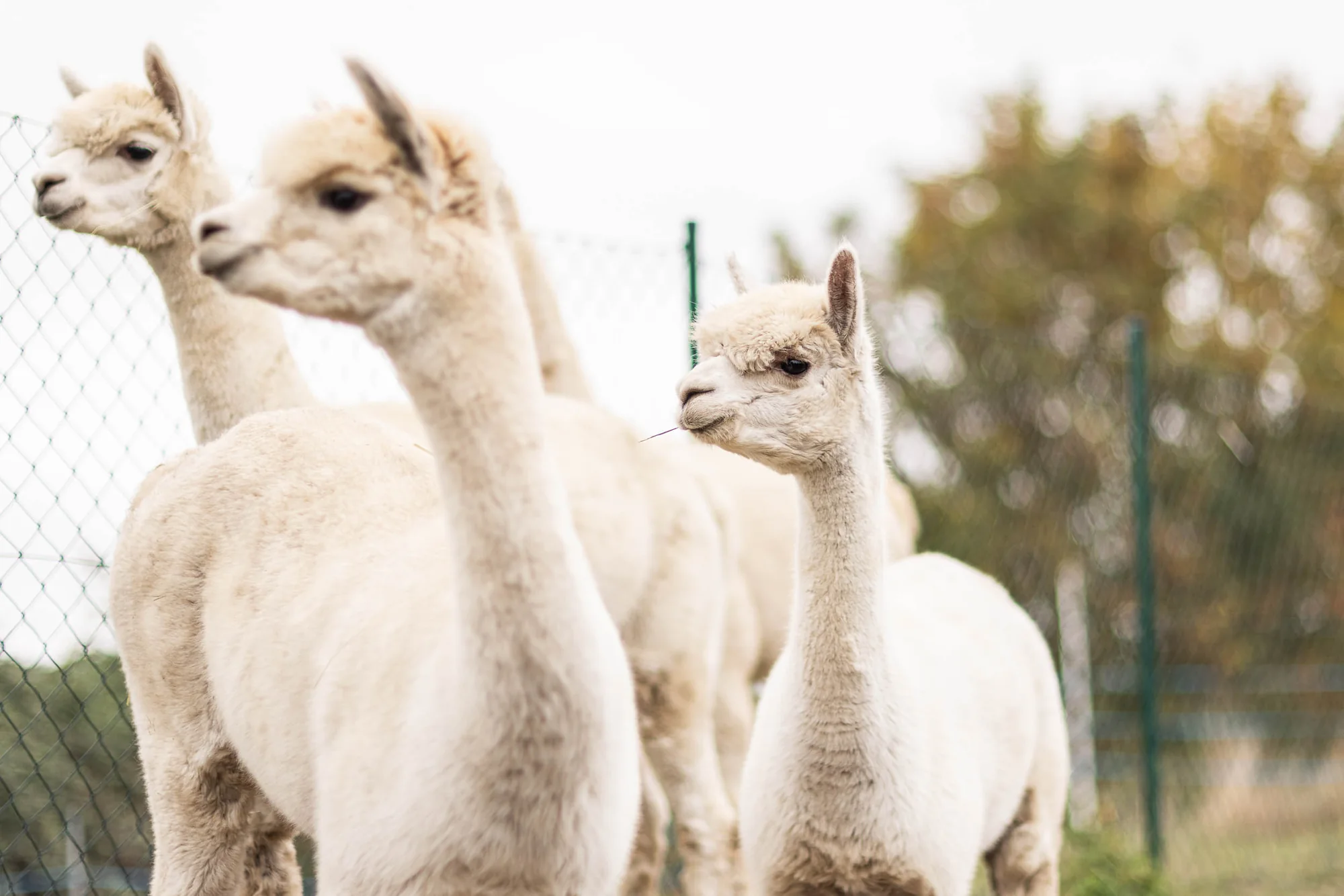
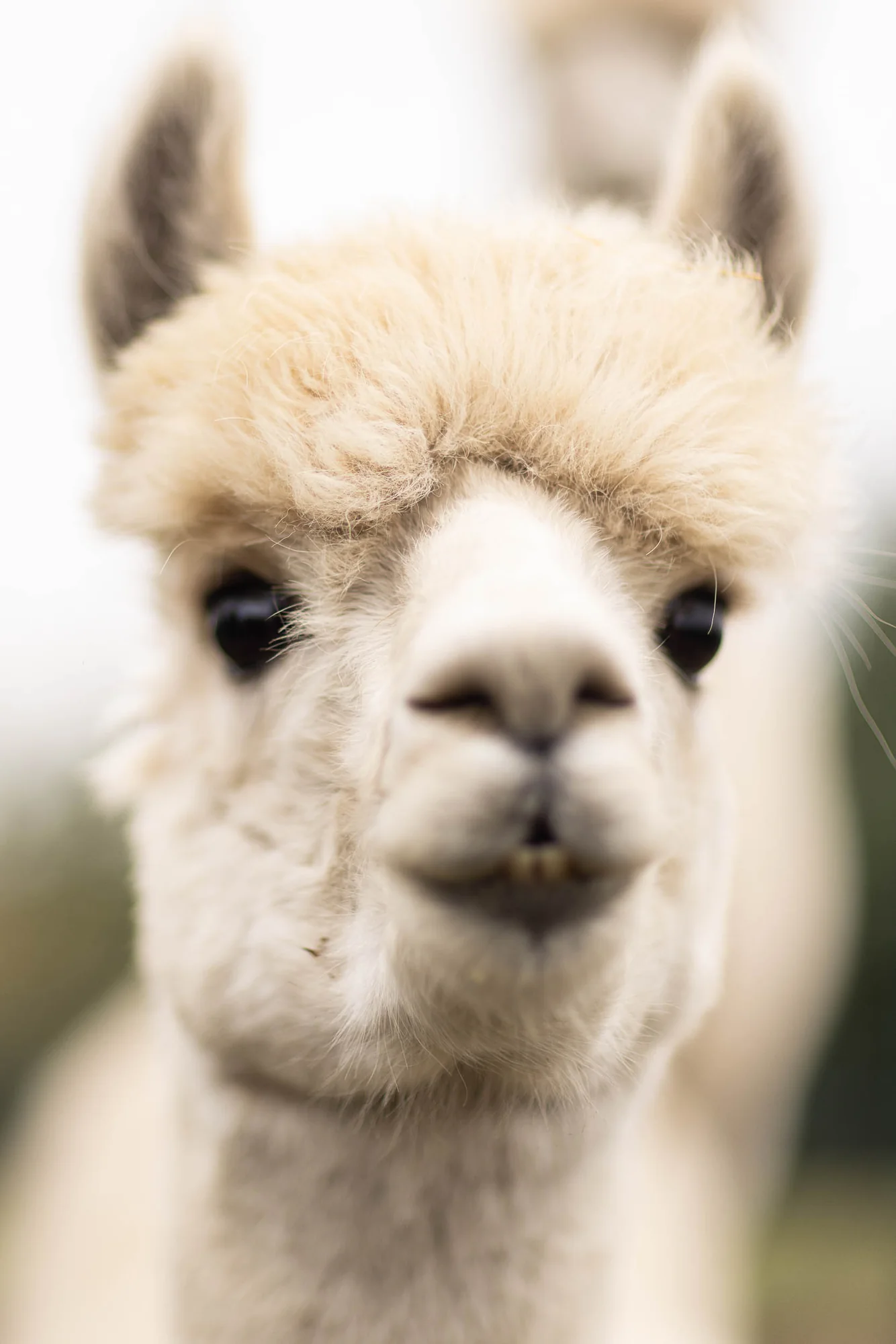
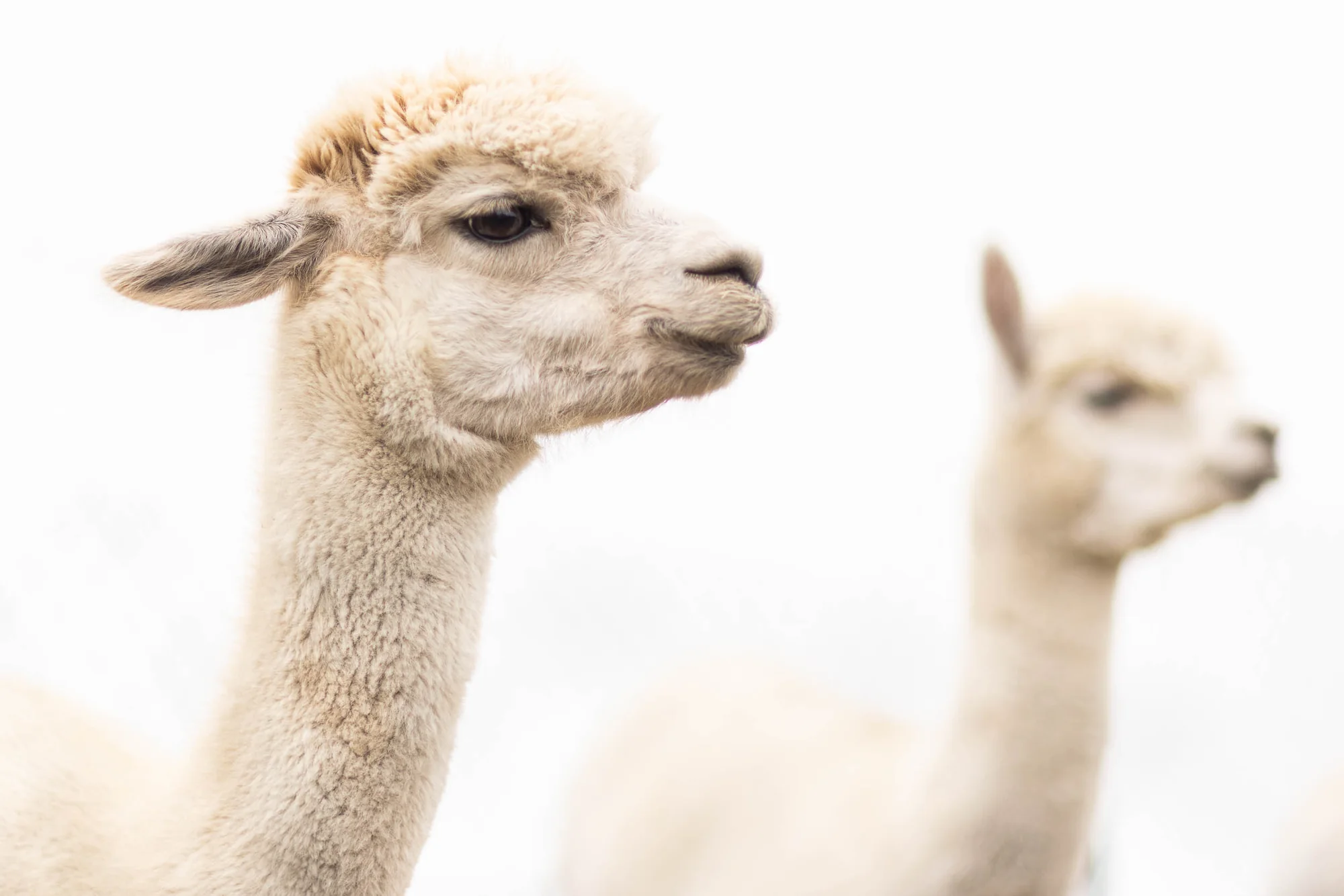
Alpacas come from the high Andes, from altitudes between 3,500 and 5,000 metres. They were bred from the wild vicuña at least five to six thousand years ago. That they of all animals now stand at a garden fence in Brandenburg is one of history’s lovelier detours.
They have one habit every gardener will adore. The whole herd uses a few fixed spots for dung and urine, and does not graze there. Alpacas build their own manure heap. For us that means no combing the entire pasture, just a few places where the black gold is already waiting.
None of this is new. In the Andes people have used llama and alpaca dung for thousands of years, as fuel and as fertiliser. In 2011 a team led by the palaeoecologist Alex Chepstow-Lusty found, in the sediment of a small lake near Cusco, a sudden rise in mites that live on animal dung, at the same time as the first maize pollen, around 2,700 years ago. They read it as a sign that llama manure made growing maize at high altitude possible in the first place. The question is not fully settled. But it is a fine thought that our wheelbarrow is continuing a very old story.
Why alpaca manure
of all things
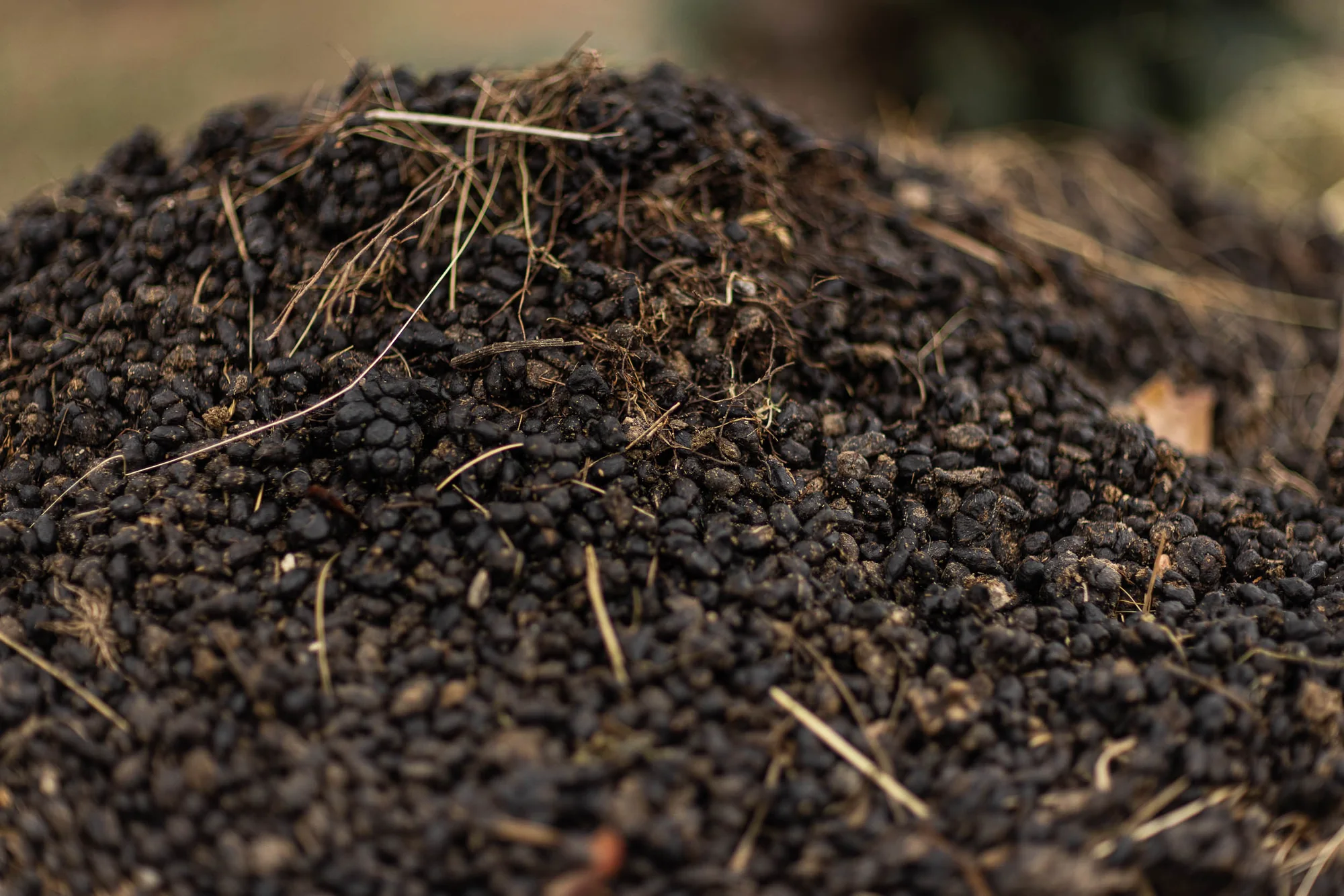
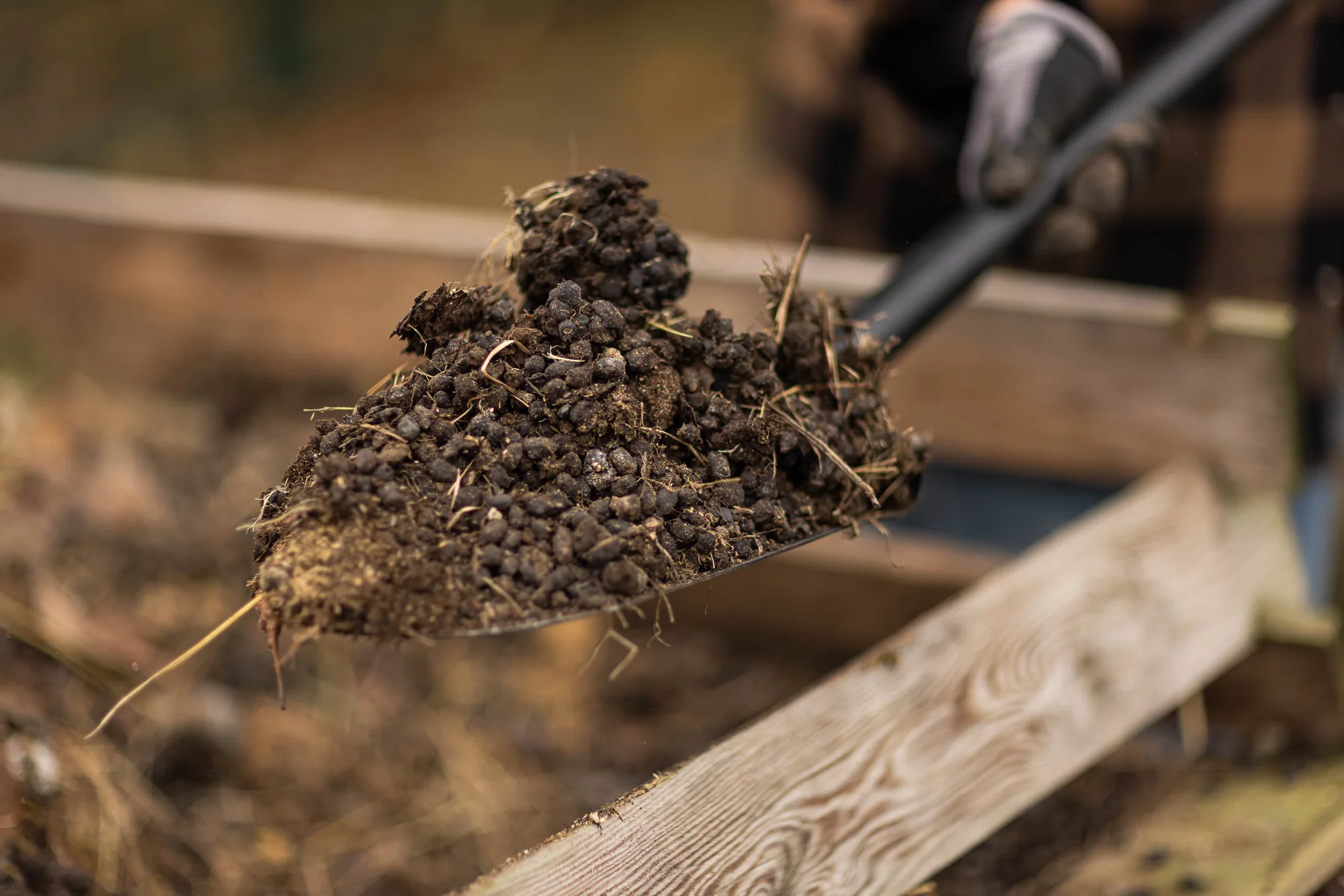
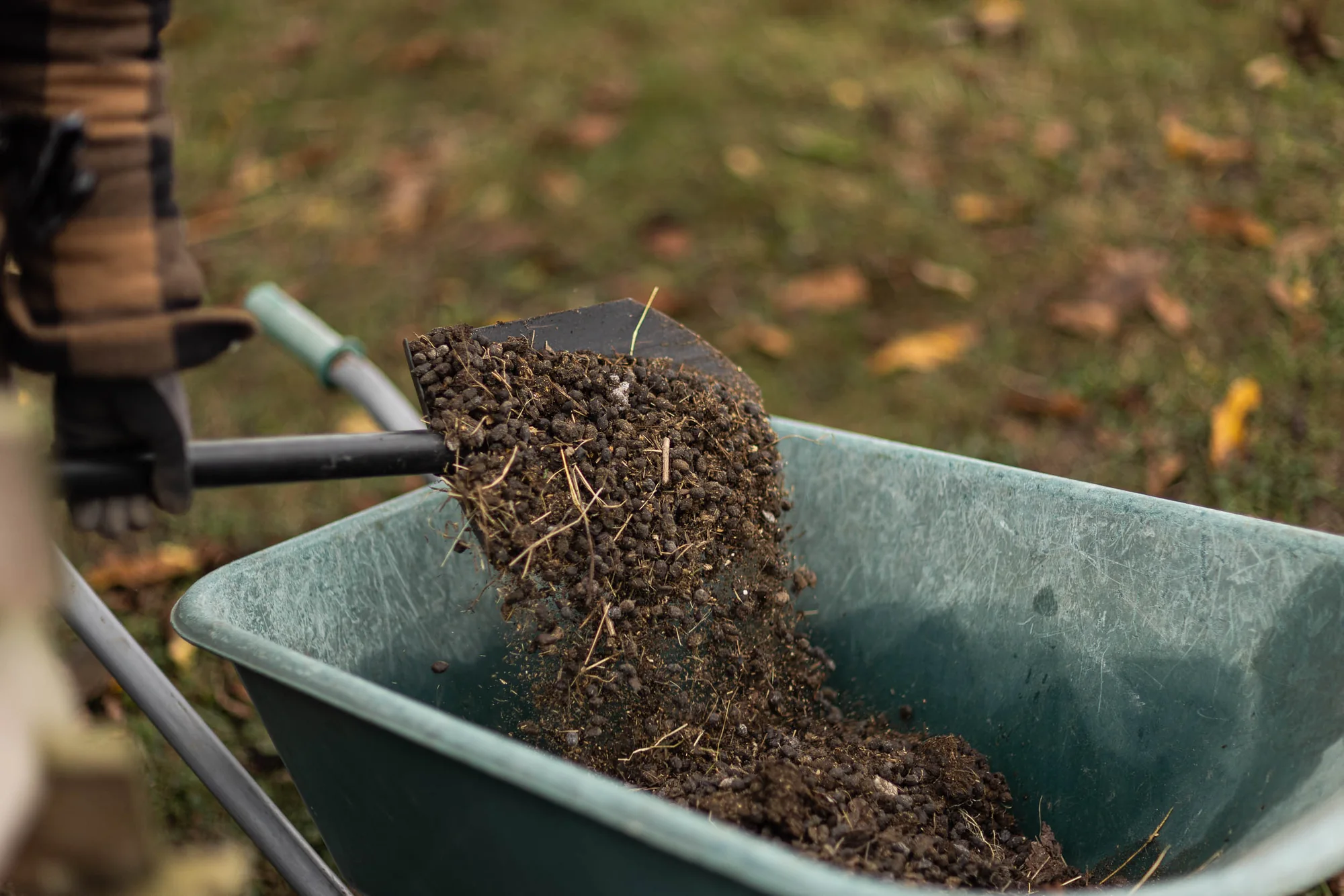
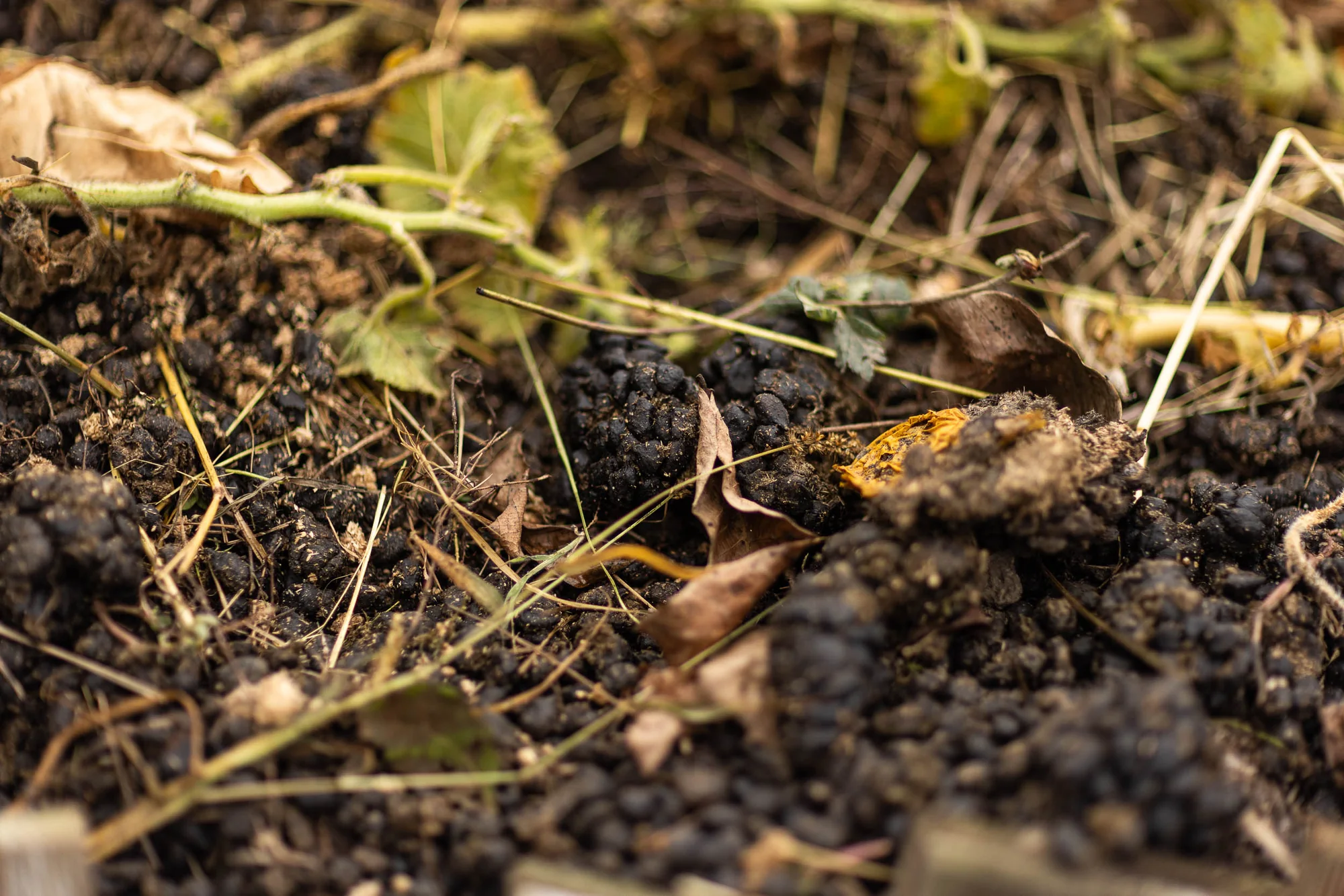
Alpacas are not true ruminants, but they digest just as thoroughly, with a stomach of three compartments. What comes out at the end are small, dry pellets, finely broken down and barely smelling of anything. They fall apart quickly, are easy to measure out and spread easily between plants.
That is why gardeners value it so highly. It smells of very little. It brings structure into the soil. And it is known for being low in viable weed seed, quite unlike horse manure, since horses digest seeds less thoroughly. Because alpaca manure is comparatively mild, many gardeners use it fresh. We take our time: in autumn, on beds that will not be planted again until spring. That gives it half a year to become soil.
An honest word about the numbers. Very precise nutrient values for alpaca manure circulate online. Independent laboratory analyses are rare, and the content depends heavily on what the animals eat. Our alpacas live on grass and hay. What we can say with confidence is what a comparison with other manures shows.
Four manures side by side
Tap a column to highlight it. Nutrient values as per cent of fresh weight, where reliable data exist.
| Property | ||||
|---|---|---|---|---|
| Form | small, dry pellets | strawy, loose | moist, often sloppy | fine, usually with bedding |
| Odour | low | moderate | noticeable | strong |
| Viable seed | known to be low | common, seeds not fully digested | possible | few |
| Nitrogen | no reliable lab values, varies with feed | 0.5 to 0.9 % | 0.35 to 2.0 % | 1.6 to 4.3 % |
| Fresh on beds | mild, often used fresh | better composted | better aged, high in salts | no, can scorch plants |
| Collecting | easy, fixed dung piles | from the stable, with bedding | from the barn, with bedding | from the coop, with bedding |
Sources: values for horse, cattle and chicken from University of Arizona Extension, Manure in the Home Garden · dung piles and pellet form: MSD Veterinary Manual · seed in horse manure: Ask Extension, Colorado State University
Work that brings
joy
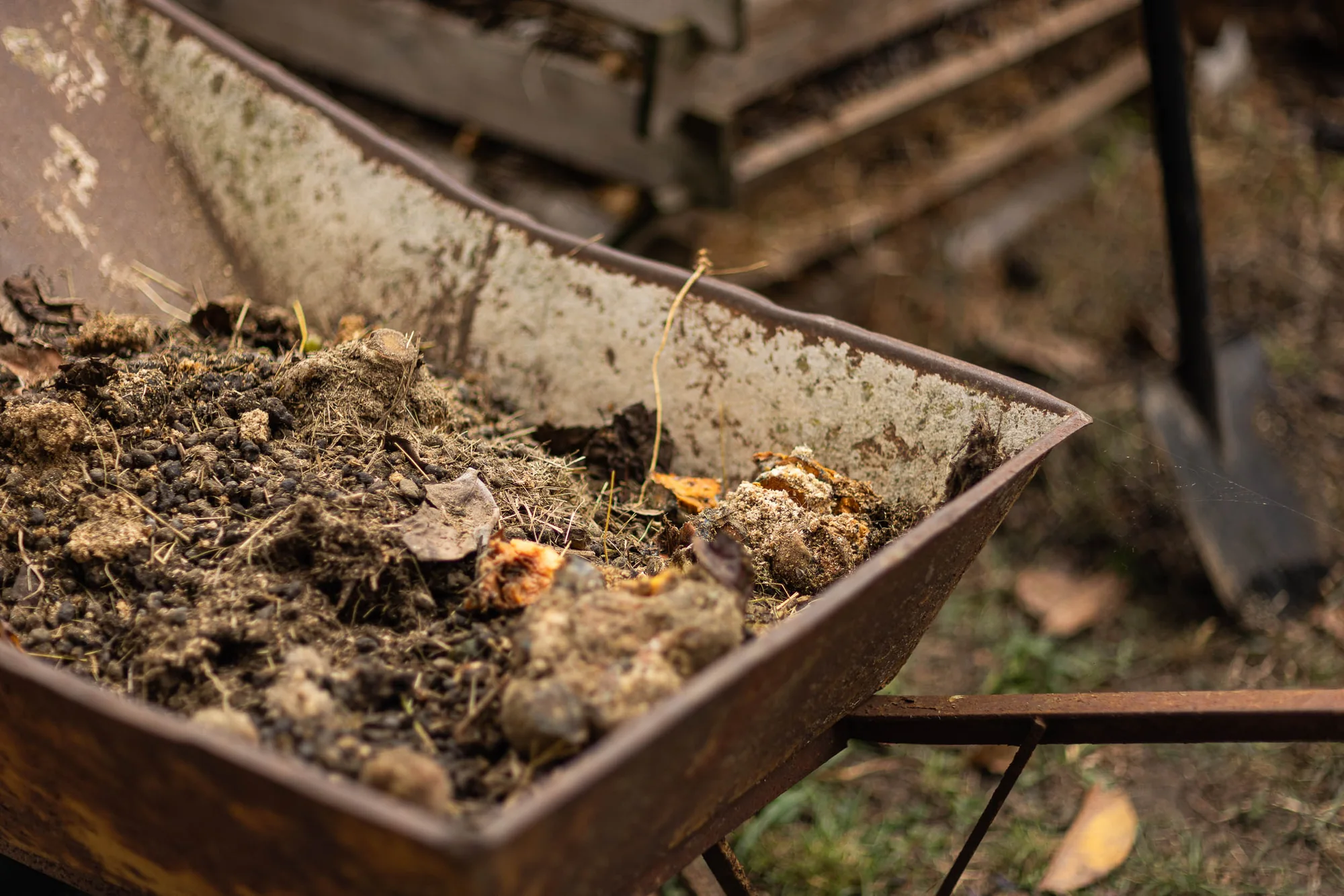
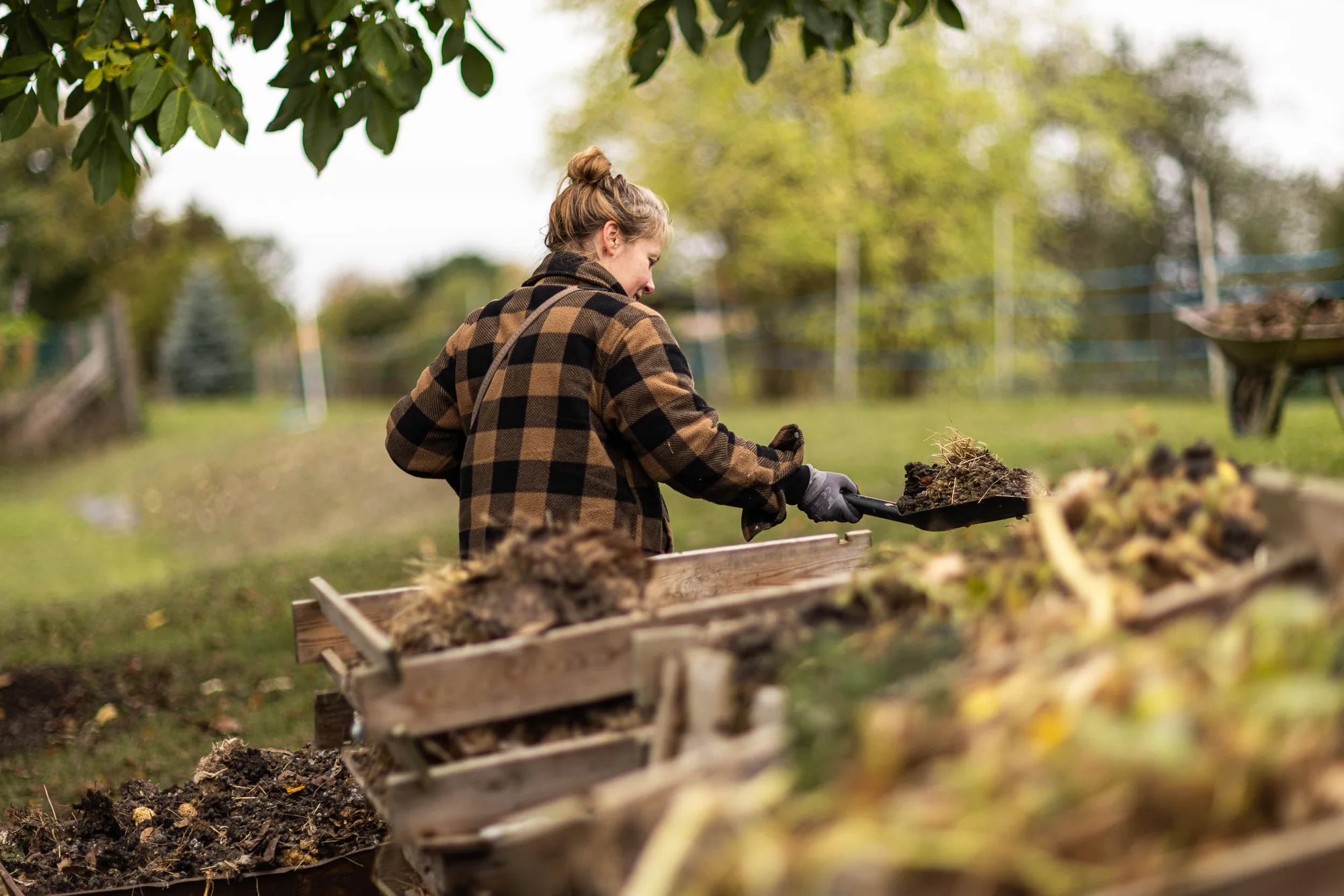
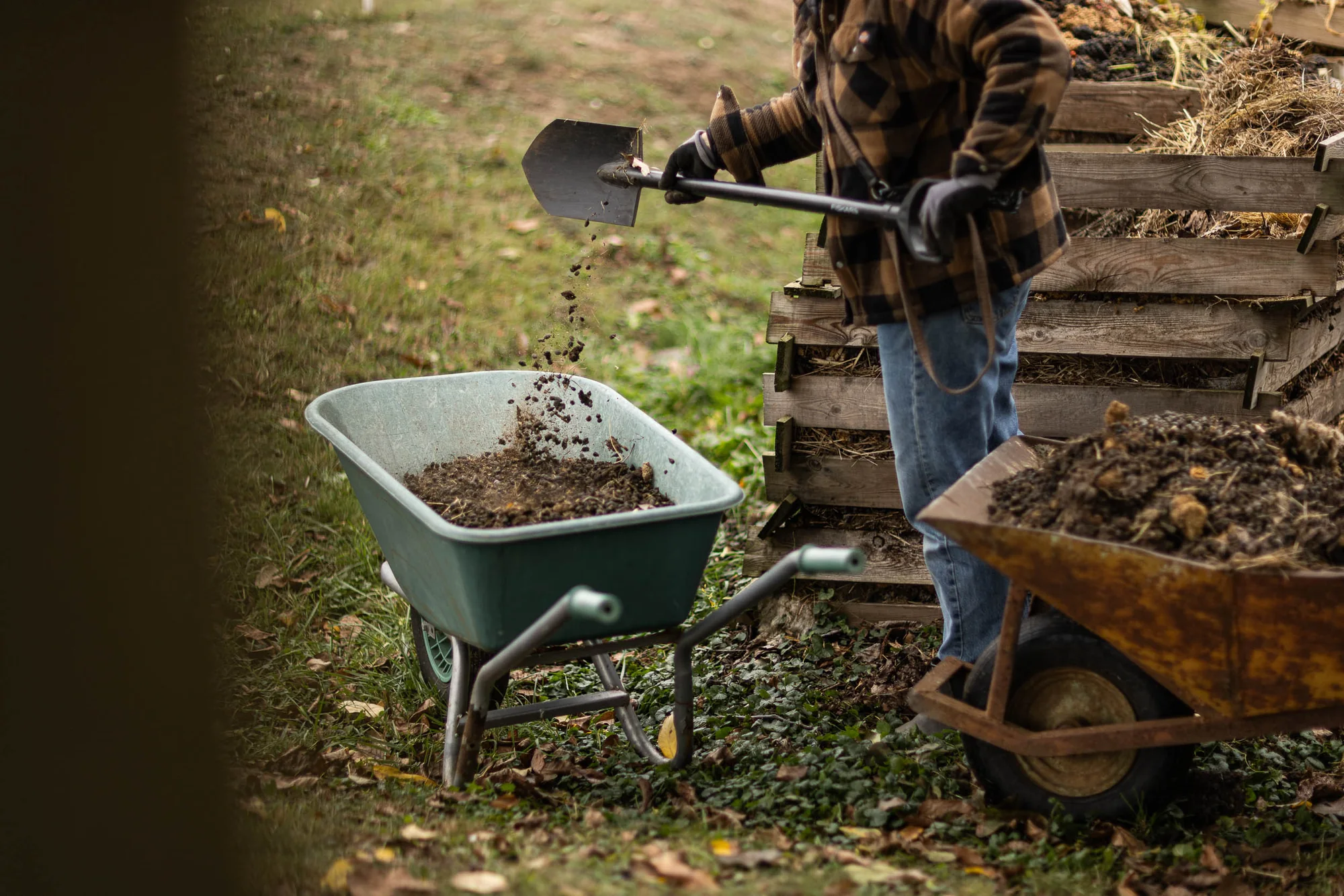
Of course it is work. Three wheelbarrows, half a day, and a back that knows by evening what it has done. And still this is one of the best days of the gardening year. It is the kind of work where you can feel a circle closing: the alpacas eat the grass, their manure feeds the soil, the soil feeds the beds, and the beds feed us.
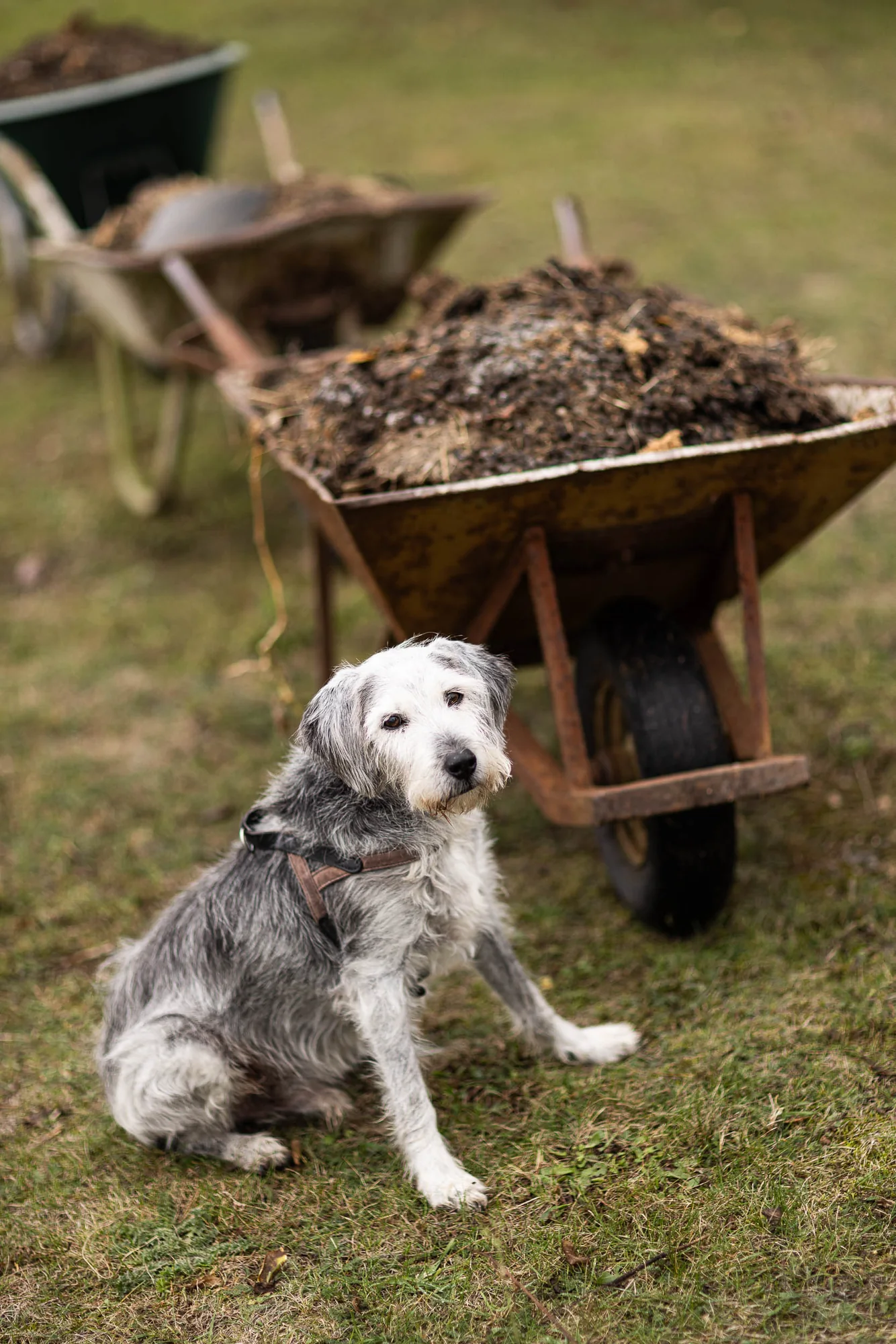
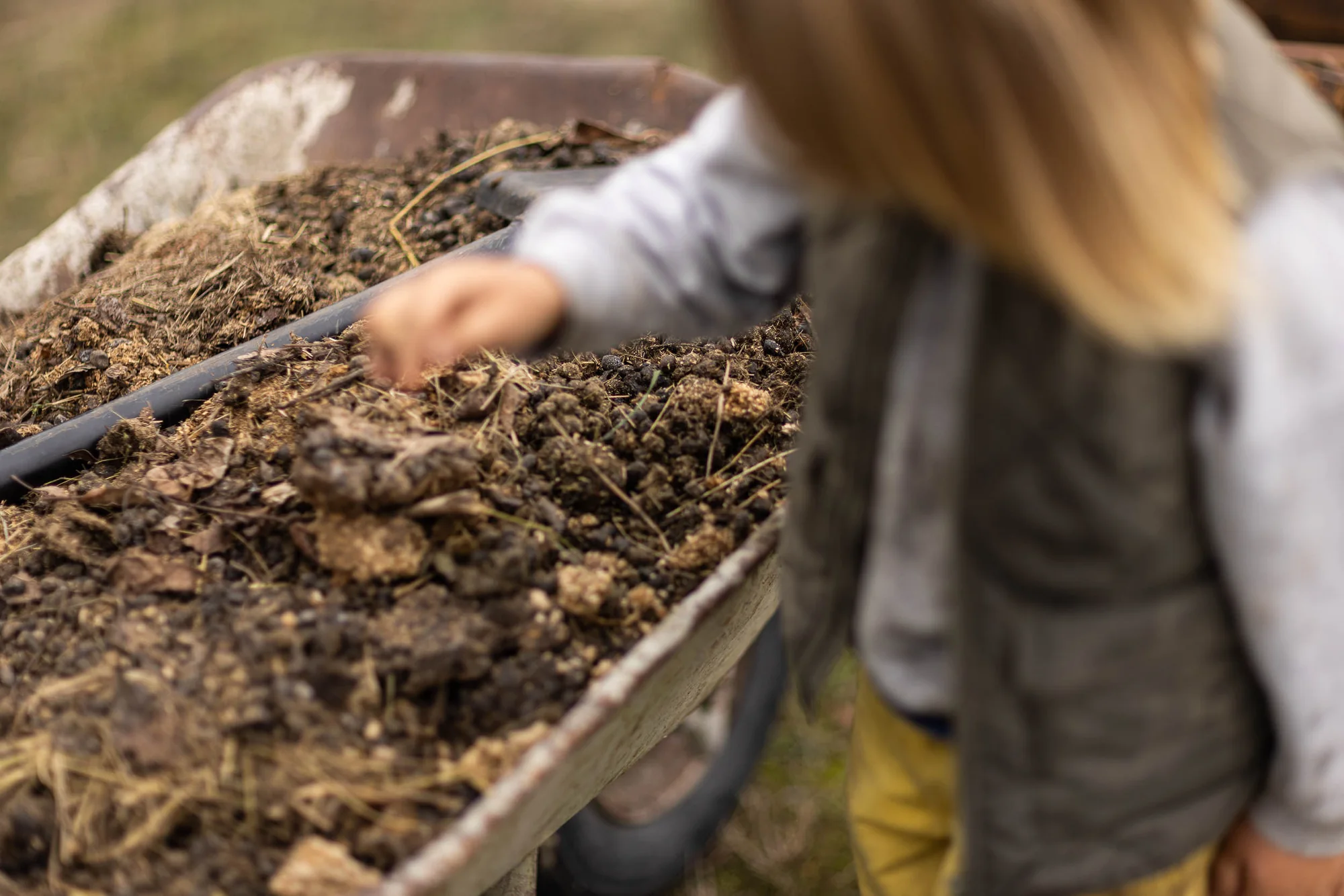
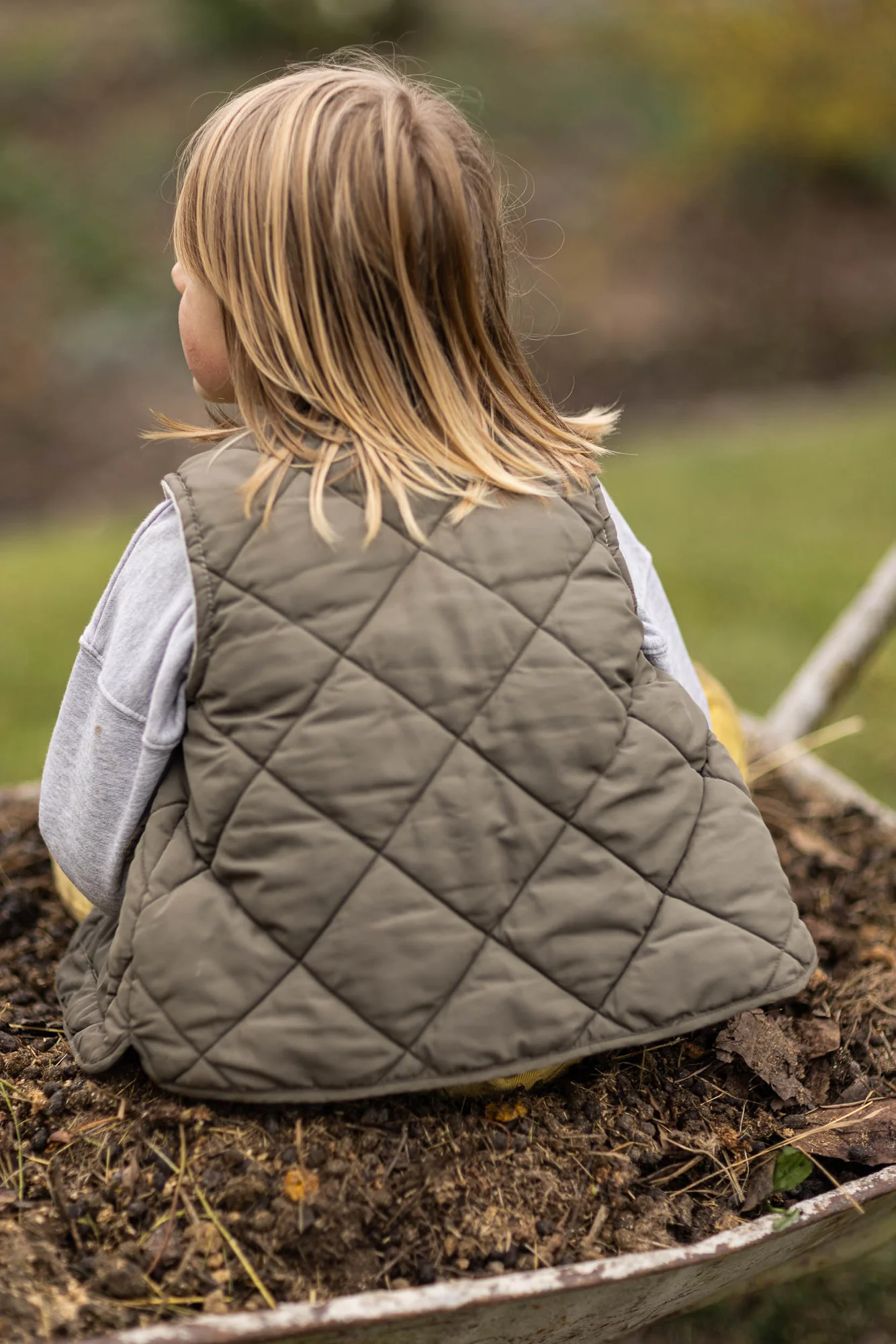
The smallest hands are the keenest. Children know exactly what real work is: anything that gets you dirty and leaves something looking different from before. At some point you simply sit down in the barrow and are perfectly content. The dog supervises from a safe distance to the wheel.
Sand that learns
to hold water
Brandenburg is a dry region with light soils. Between 2017 and 2025 it received on average around 552 millimetres of rain a year, against roughly 762 for Germany as a whole. Every single one of those nine years was drier in Brandenburg than the national average, and 2018 brought just 390 millimetres.
Then there is the sand. The Ackerzahl, the German index for the productive capacity of arable soil, averages just under 34 across the state, on a scale where Germany’s best soils sit around 100. More than eight in ten rated hectares of farmland in Brandenburg score below 40. Gardening here means gardening on a soil that lets water through fast and holds on to nutrients only reluctantly.
Brandenburg in two numbers
Annual precipitation as an area average, Brandenburg and Germany, 2017 to 2025. On average Brandenburg receives around 210 millimetres less, more than a quarter.
Data as a table
| Year | Brandenburg (mm) | Germany (mm) | Less than Germany (mm) |
|---|---|---|---|
| 2017 | 721.4 | 858.7 | 137.3 |
| 2018 | 390.4 | 586.3 | 195.9 |
| 2019 | 505.4 | 735.0 | 229.6 |
| 2020 | 511.1 | 704.9 | 193.8 |
| 2021 | 600.1 | 801.1 | 201.0 |
| 2022 | 434.3 | 669.1 | 234.8 |
| 2023 | 724.9 | 958.0 | 233.1 |
| 2024 | 600.3 | 901.6 | 301.3 |
| 2025 | 480.2 | 642.0 | 161.8 |
Rated arable land in Brandenburg by Ackerzahl, 2025. The Ackerzahl describes a soil’s productive capacity, with the best sites around 100. Highlighted: all land below 40, together around 83 per cent.
Data as a table
| Ackerzahl | Area (ha) | Share |
|---|---|---|
| 0 to 20 | 2,719 | 0.2 % |
| 20 to 30 | 348,137 | 28.2 % |
| 30 to 40 | 674,403 | 54.6 % |
| 40 to 50 | 175,566 | 14.2 % |
| 50 to 60 | 33,486 | 2.7 % |
| 60 to 70 | 67 | 0.0 % |
| 70 to 80 | 0 | 0.0 % |
| 80 to 90 | 1 | 0.0 % |
Source: Agrarbericht Brandenburg, Natural conditions, precipitation from meteo.plus data, Ackerzahl from LELF, February 2026.
How extreme this can get is set out in the 2025 annual report of the Finck Foundation at Gut & Bösel in Alt Madlitz, east of Berlin, where regenerative farming is tested under real conditions together with research institutes. In 2025 they recorded 491.6 millimetres. From March to June only a fraction of the usual rain fell, then in July more than 150 millimetres arrived in a short time, 52.5 on 21 July alone. Dried out soil can barely take in that much. The water runs off and carries the topsoil with it, precisely the part that matters most for fertility and soil life.
The most important lever that research and practice describe there is humus. It improves soil structure and raises the soil’s capacity to store water. In 2025 the estate fermented around 2,000 tonnes of manure and produced 500 tonnes of compost to do exactly that at scale. Our garden is smaller. The principle is the same.
So how much does humus really do? The most honest answer we found comes from a 2018 analysis by Budiman Minasny and Alex McBratney. Their conclusion is sober: one percentage point more organic carbon stores on average about 1.2 millimetres more plant available water per ten centimetres of soil. That sounds like little. But the effect is largest in sand, and in sand every litre counts. Work it out for your own bed.
How much more water does your bed hold?
Move the sliders. The calculator shows how much more plant available water a bed can hold as its humus content rises. This store refills after every rain.
Central estimate after Minasny and McBratney 2018: 1.16 mm per 10 cm of soil for one percentage point of organic carbon, range 0.7 to 2.0 mm. Humus is converted to carbon with the usual factor of 1.72. In sand the effect tends towards the upper end.
Source: Minasny, B. & McBratney, A. B. (2018): Limited effect of organic matter on soil available water capacity. European Journal of Soil Science 69, 39 to 47.
A blanket of manure,
straw and leaves
Then into the garden. Through the yellow leaves on the path, past the raspberries, between cosmos and sunflowers that are still flowering as though nobody had told them about winter.
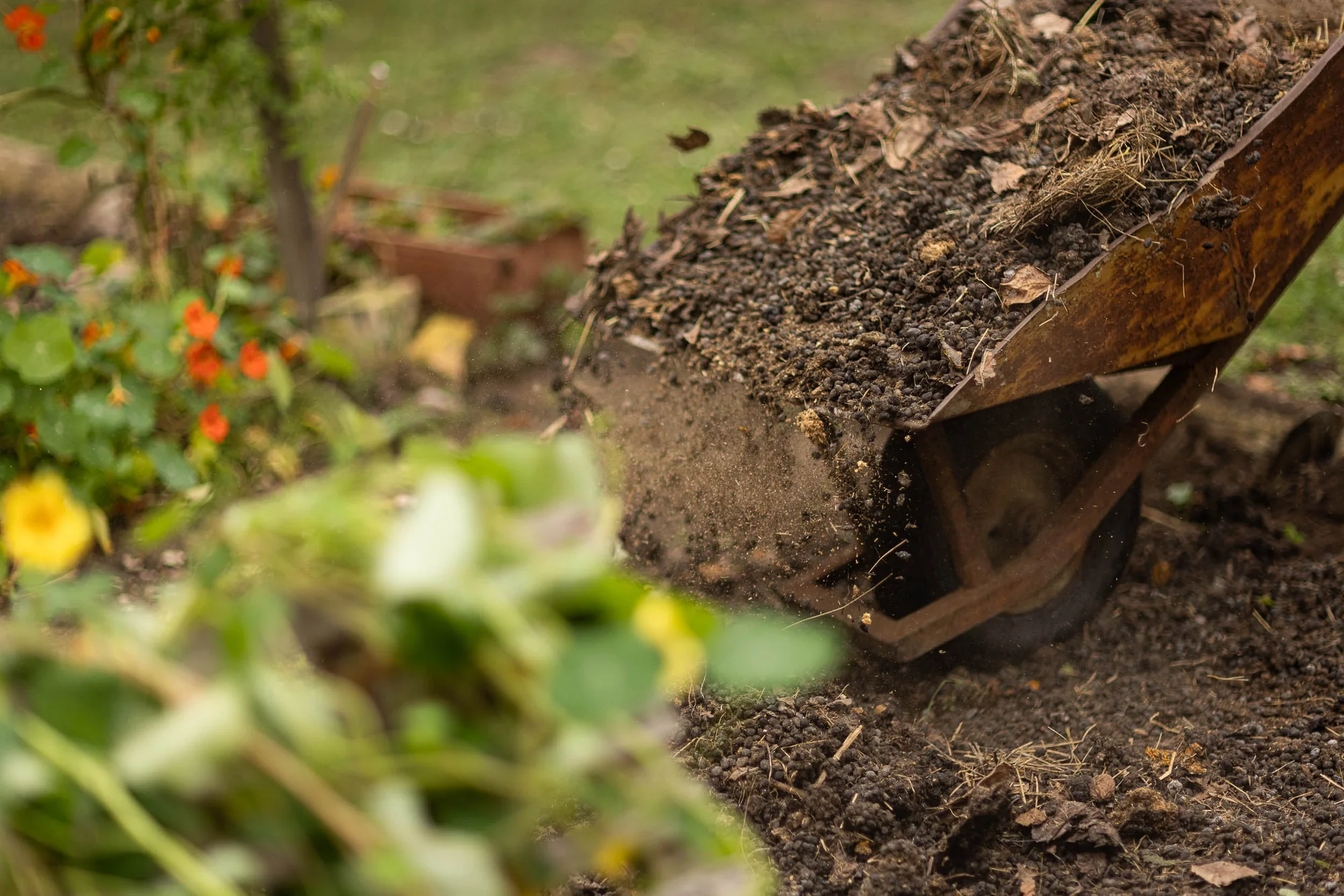
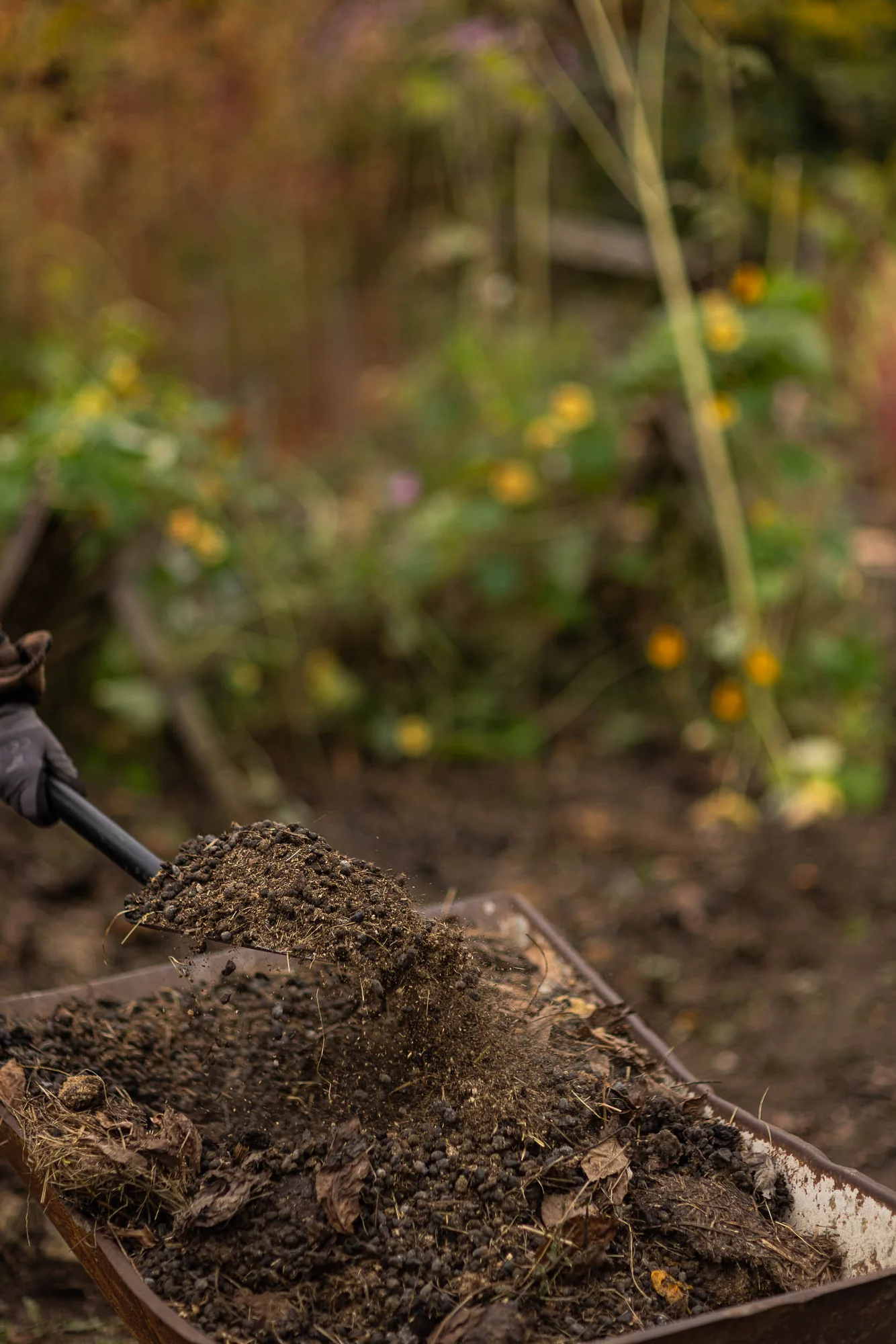
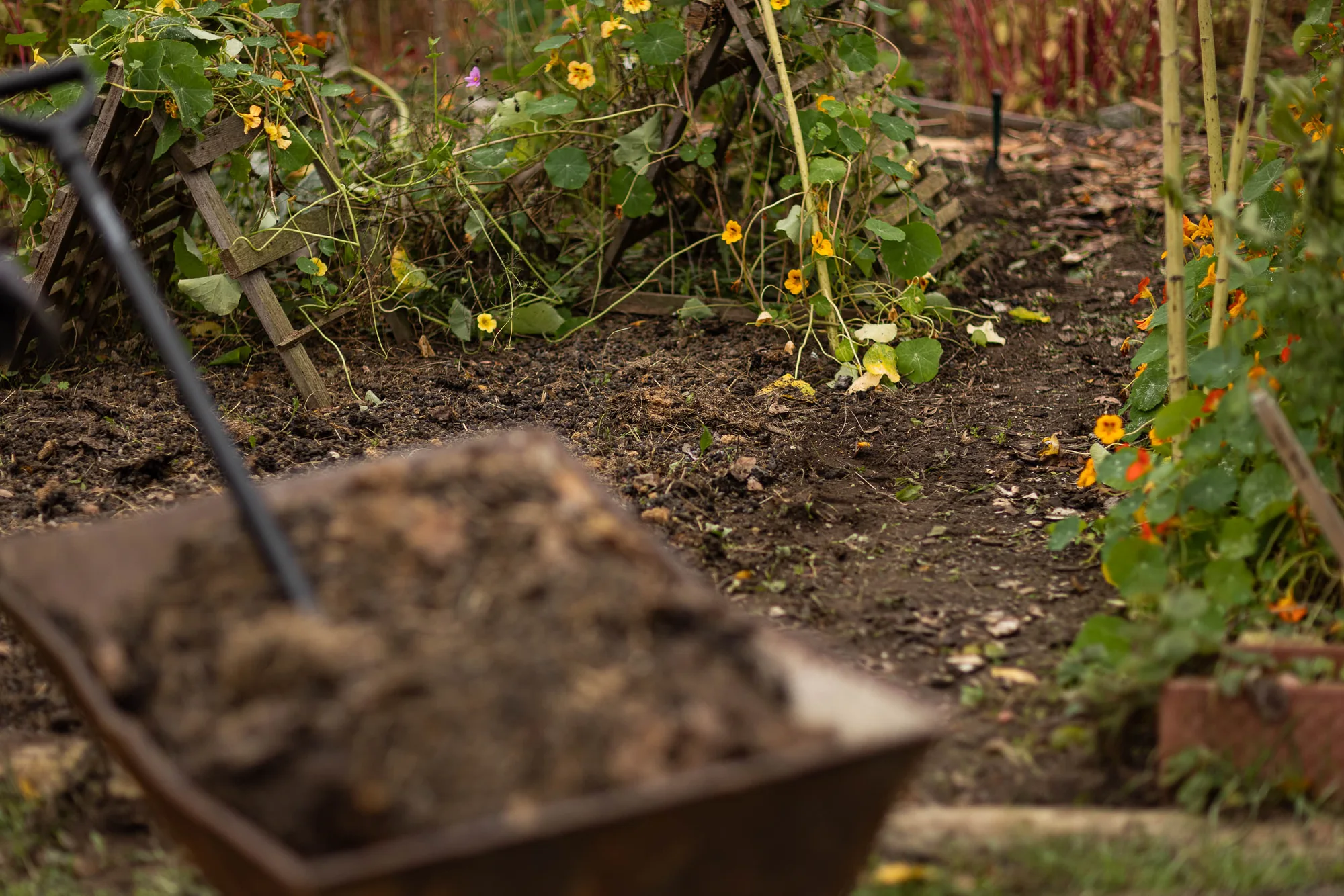
We spread the manure thinly, a layer of two or three centimetres, around the raspberries and currants and over the beds that held vegetables in summer. Nothing is dug in. The manure stays on top, mixed with straw from the stable and the leaves that fall anyway. That is the winter blanket, and the soil life takes care of the rest.
What happens under
the blanket
From here on, others do the work. Earthworms pull material down from the surface, fungi and bacteria break it apart, in mild spells even in the middle of winter. Frost loosens the top layer. The blanket keeps moisture in, shelters the soil from wind and slows heavy rain before it can wash anything away.
One point deserves care, especially on sand. Autumn and winter are when nitrogen most easily moves down with seepage water, because little is growing and a lot of water passes through the soil. So we spread only a thin layer, mix the manure with straw and leaves, keep the beds covered, and put most of it where perennial shrubs are still growing roots in autumn. Research by the Saxon State Office for Environment, Agriculture and Geology shows why this works: soil cover and straw clearly reduce the nitrogen at risk of leaching before winter.
A winter under the blanket
October to April: what happens in the soil and what we do in the garden.
In the soil
In the garden
Based on LfULG Saxony 2025 on nitrogen over winter · late frost date from the Finck Foundation’s 2025 annual report, Alt Madlitz.
How we
do it
For anyone who wants to try it. Not a recipe with exact weights, but the order that has worked for us.
- The right time. October to early November, after the harvest, while the soil is still open and warm.
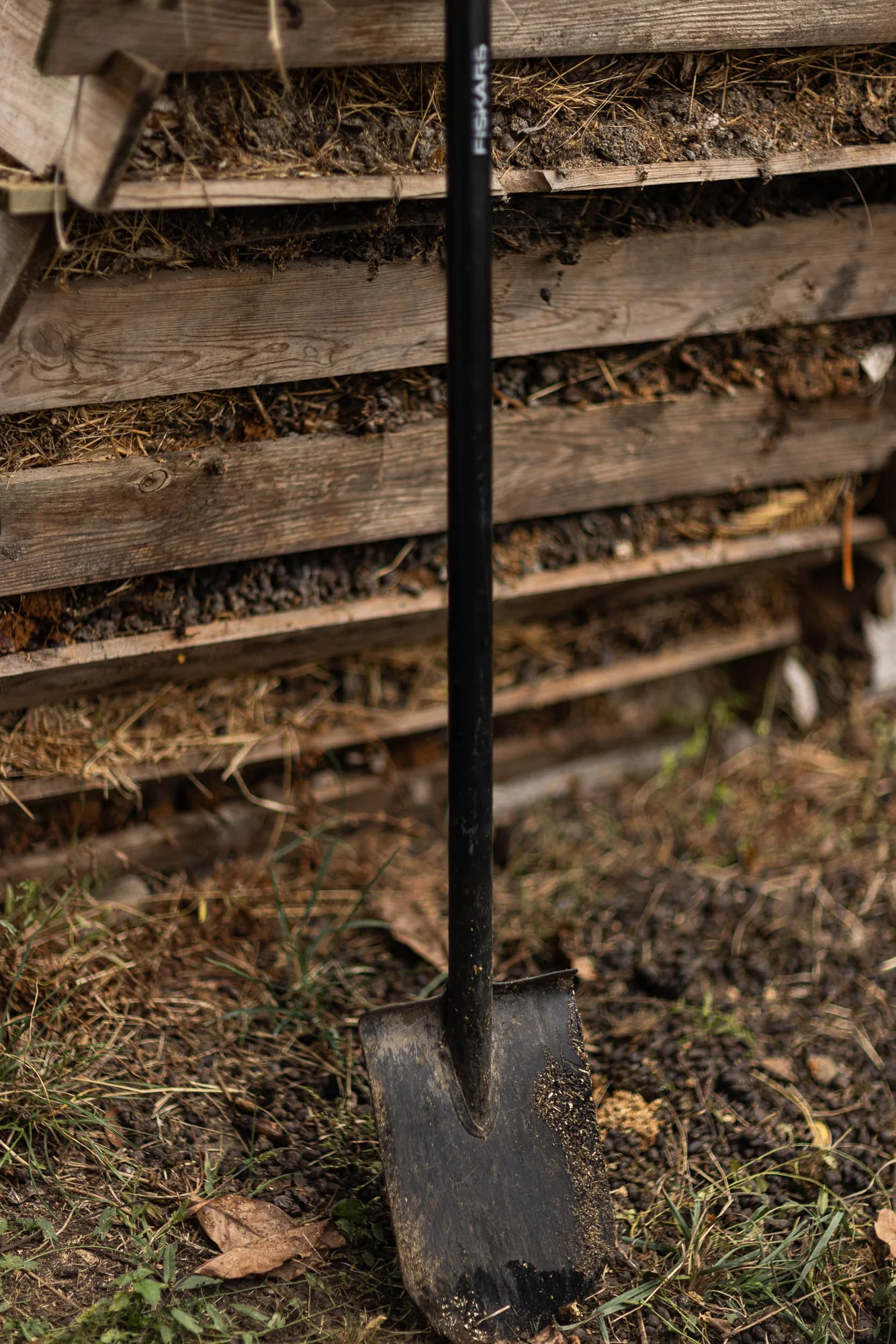
- Collect at the dung piles. Alpacas leave their manure in fixed places. A fork, a shovel, a wheelbarrow and gloves are all you need. Hay and straw can come along.
- Spread thinly. A layer of two to three centimetres is enough. Better a little every year than a great deal once.
- Mix in carbon. Straw and leaves on top or underneath. They bind nitrogen, feed fungi and protect the soil.
- Do not dig it in. The manure stays on top. Earthworms and soil life pull it down themselves without wrecking the soil structure.
- Put it where it counts. Above all around perennial shrubs such as raspberries and currants and on beds that will not be planted until spring. Not right next to young seedlings.
- Keep it covered. All winter. On sand, bare soil is vulnerable soil.
- Plant straight into it in spring. Whatever is left of the blanket stays on as mulch. Sow and plant right into it.
The plants
say thank you
Permaculture is a big word for a simple idea: gardening so that a cycle emerges that carries itself. The alpacas eat grass that grows without fertiliser. Their manure feeds a soil that holds more water and more life every year. From it grow the vegetables for the long table, and whatever is left goes on the compost and back to the beds. Nothing leaves the system, nothing has to be bought in.
Whether it works, the garden tells us itself. In spring the earth under the blanket is dark and crumbly, it smells of the forest, and the first spade turns up earthworms. The raspberries put out strong shoots and the beds are ready before we are. And on a grey Sunday next October we will be back at the fence, with empty wheelbarrows and alpacas who know exactly what is coming.